


.jpg)
You always hope for close encounters. You just can’t be sure what “close” will mean.
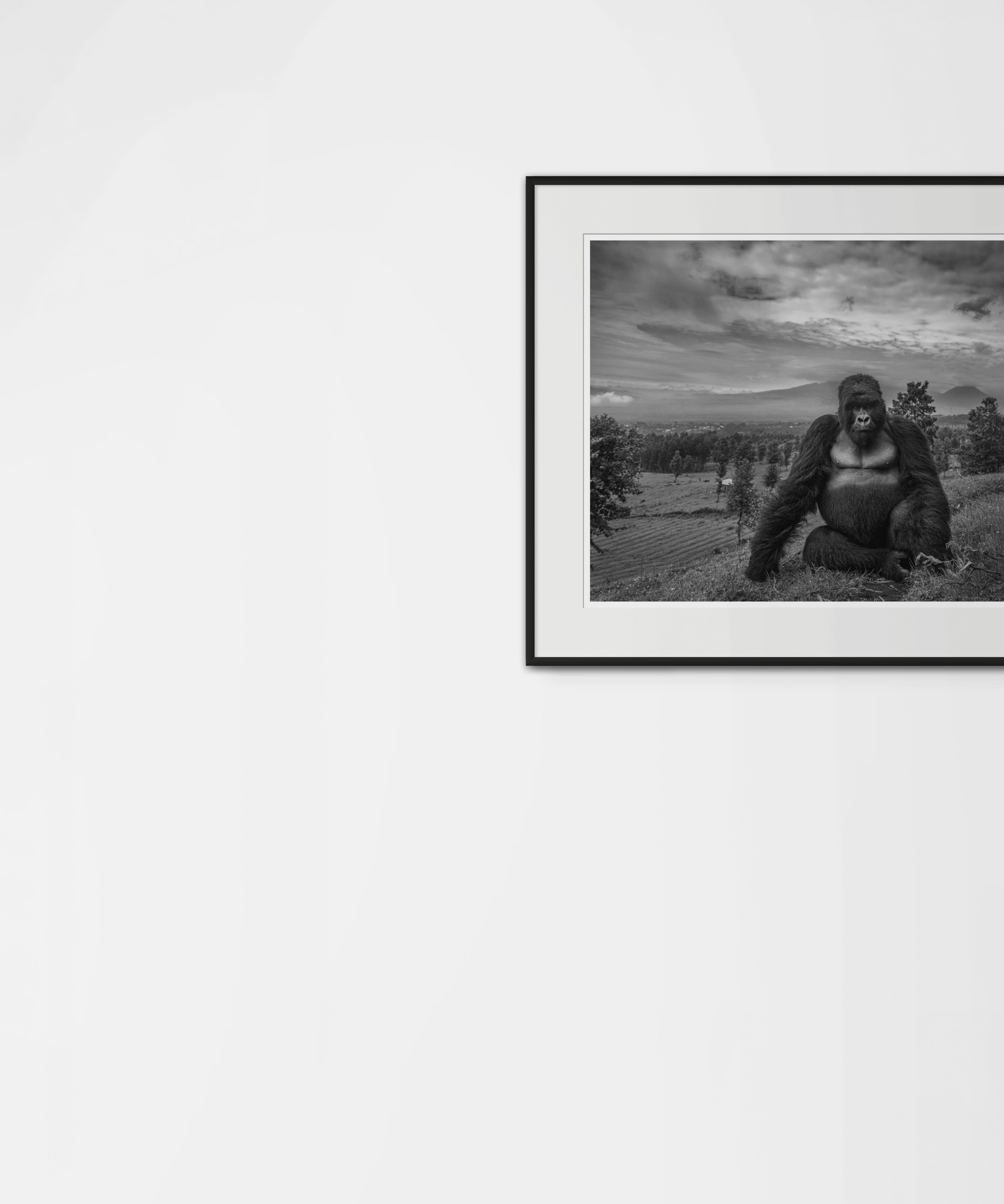
Sometimes, it's a shoulder check from a silverback.
You can read all you want about mountain gorillas, but there's still the anticipation—the unknown—as you set out.
How big are they in person?
How do they behave?
How close will you really get?
A 90-minute ride over rocky dirt roads gives you plenty of time to think.
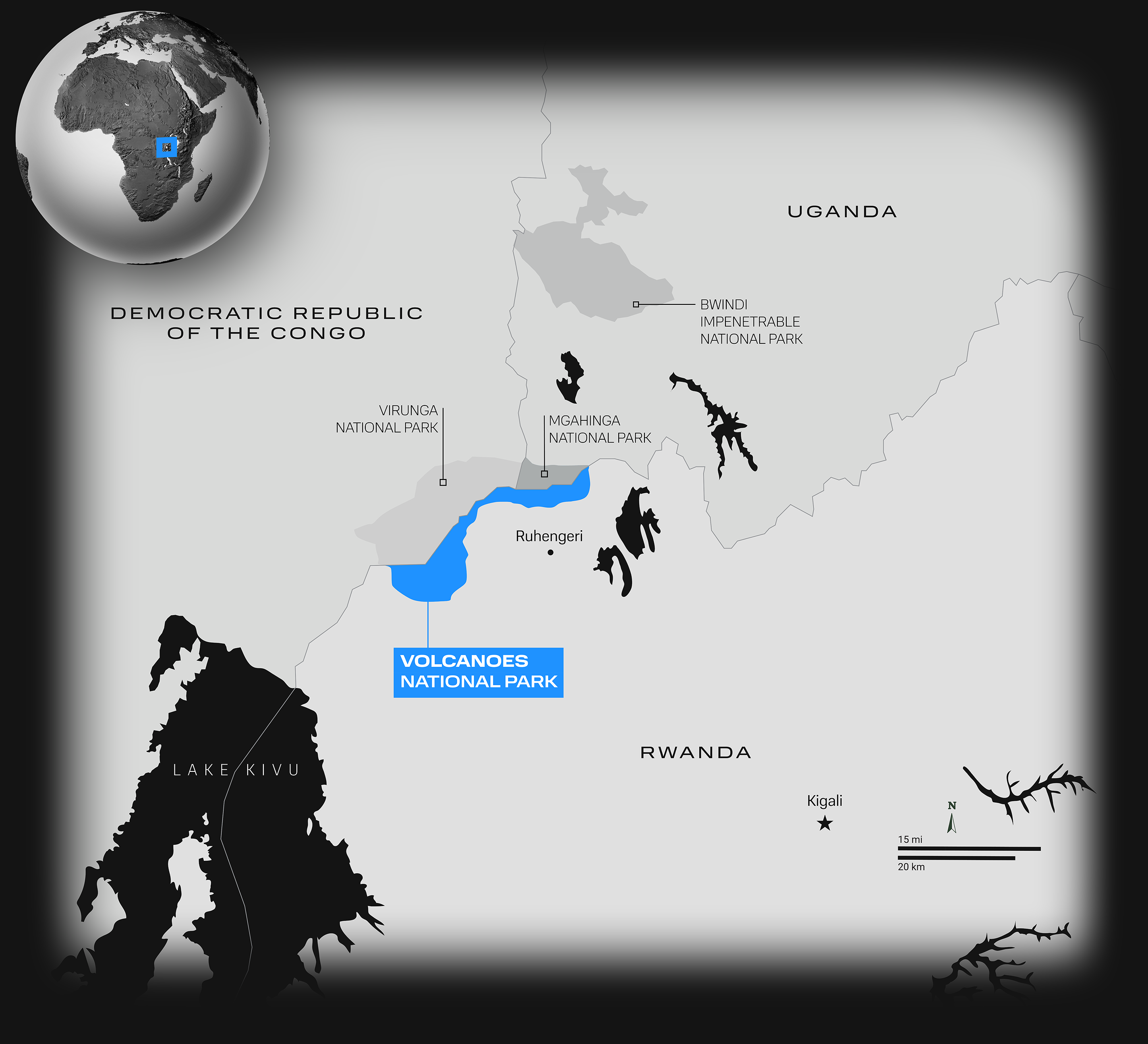
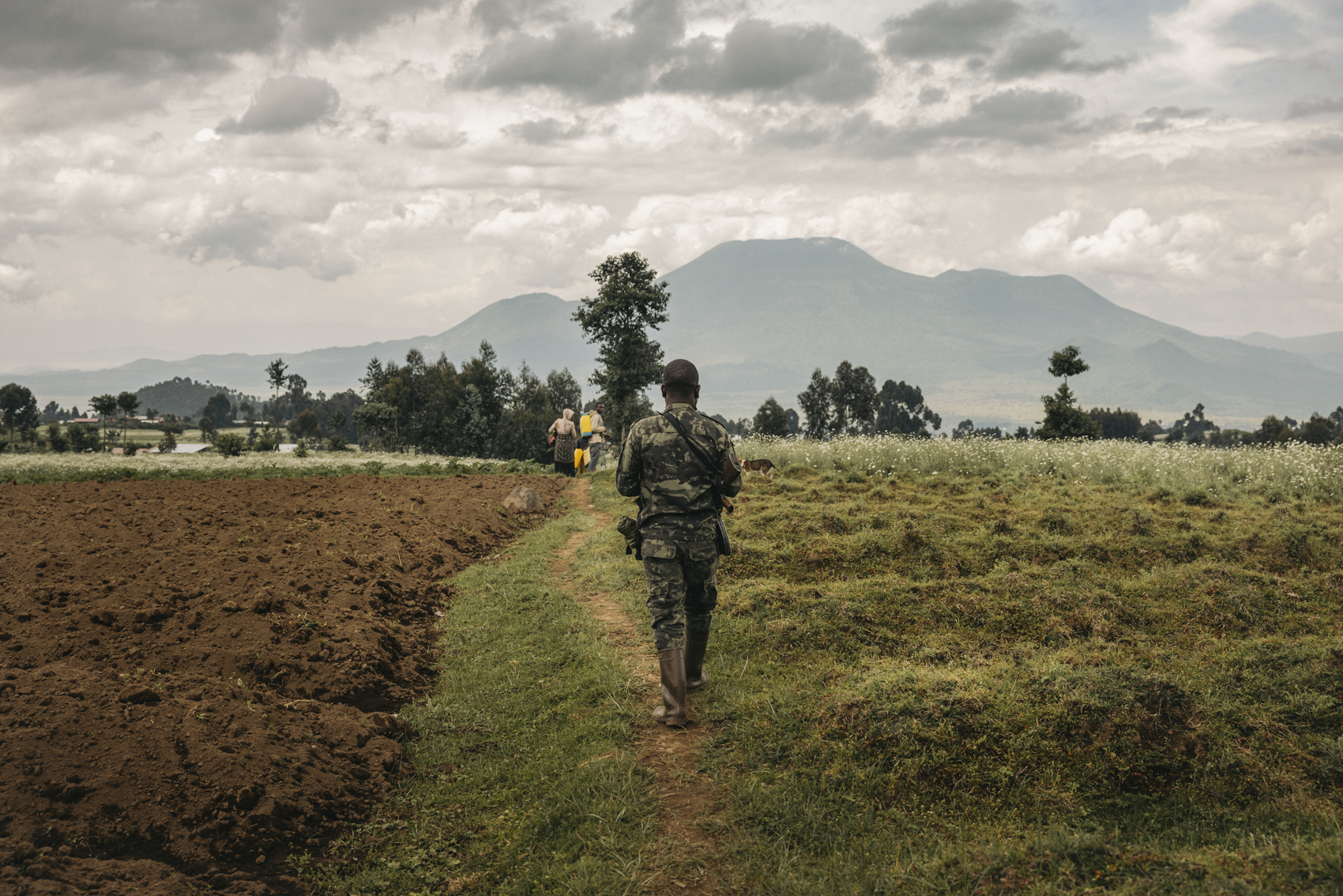
My first hike in Rwanda began near the border with the Democratic Republic of the Congo. We passed through farmland before entering the jungle, and within minutes, radio static broke the quiet. The trackers had found the family.
I'd expected a long trek. Finding them so early was like being told your tooth would be pulled on three—only for the dentist to yank on two. Unsettling a first, but you're grateful later.
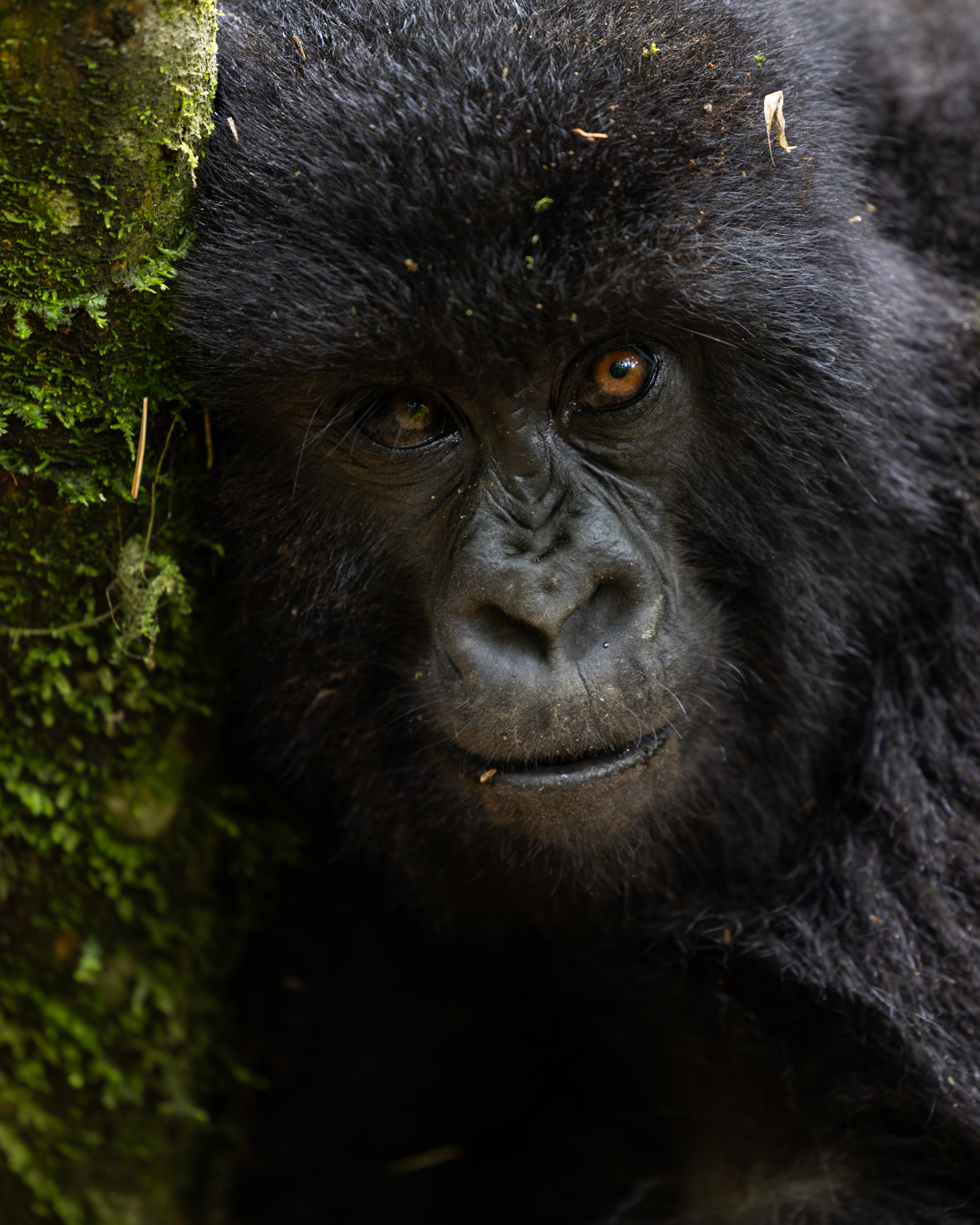
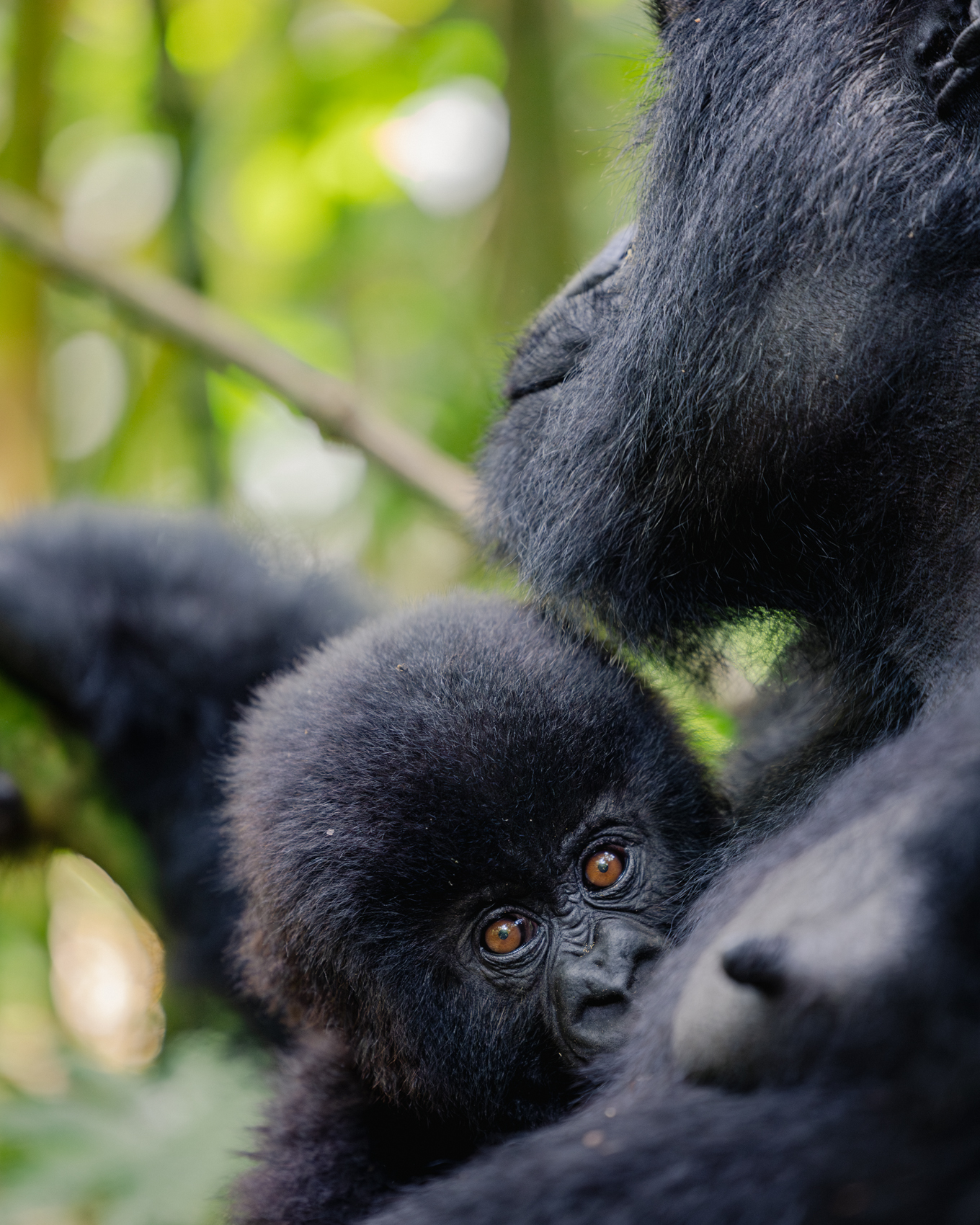
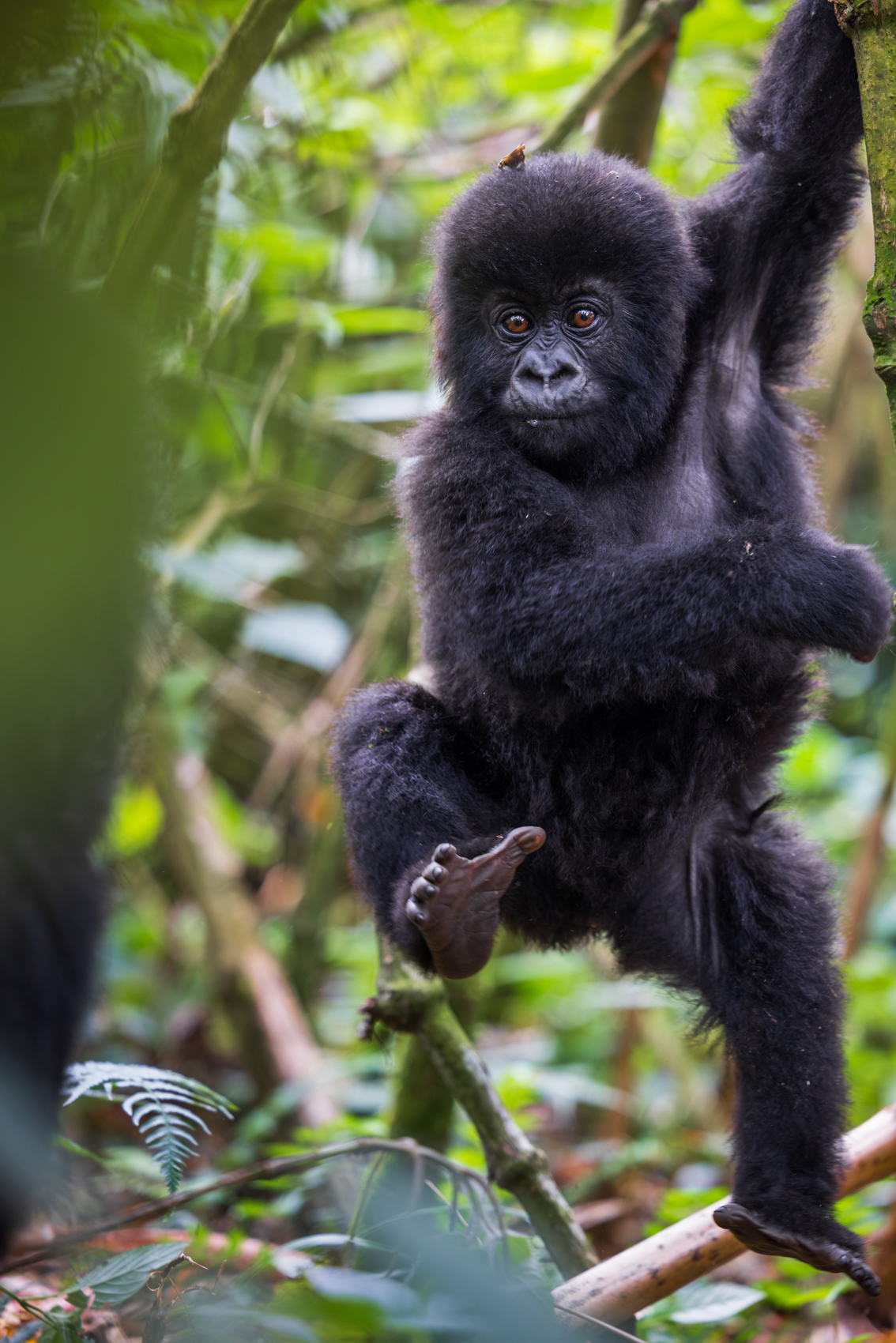
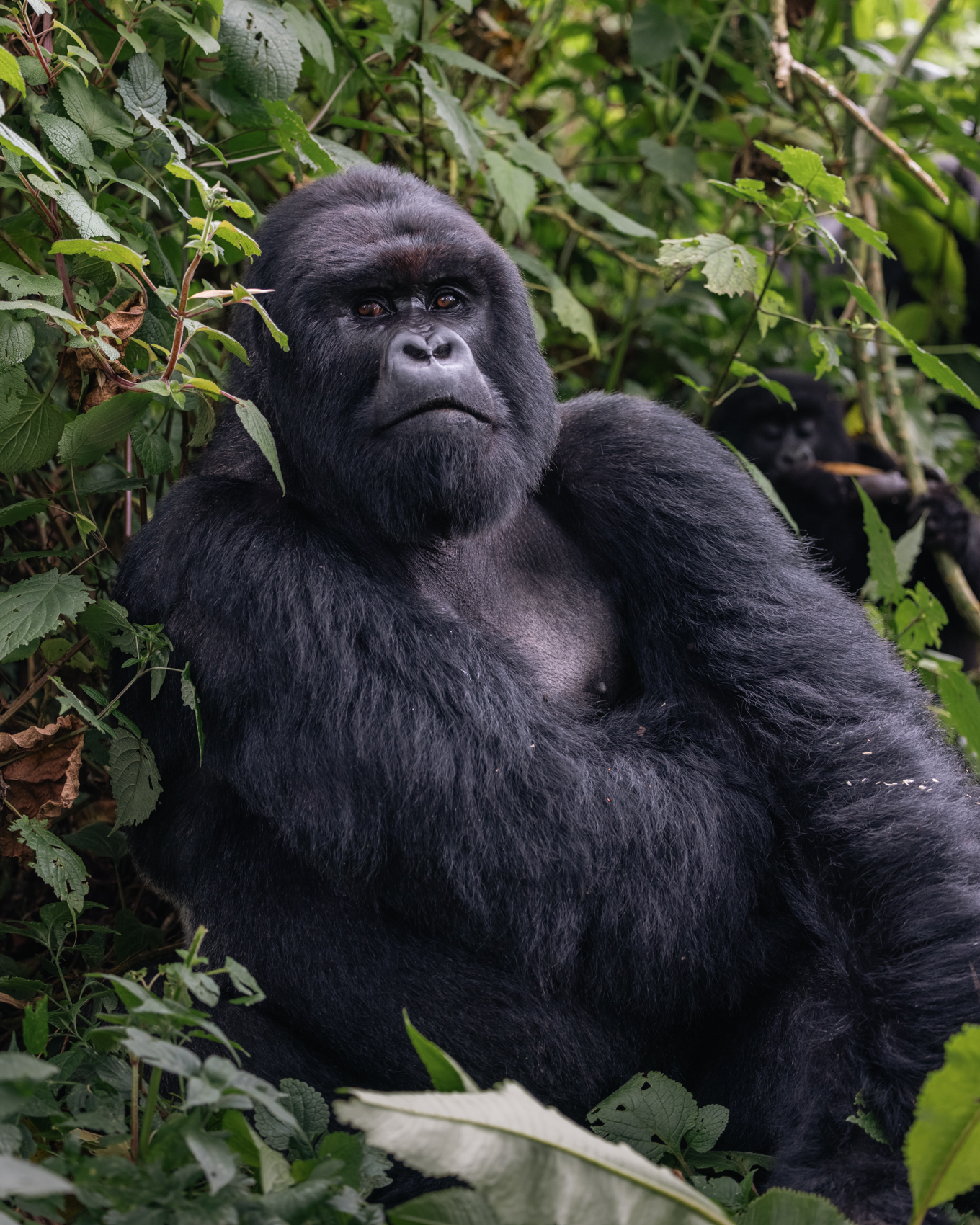
Moments later, I was following my guide into the thicket. We reached the Igisha family: mothers feeding infants, juveniles swinging from branches, even a silverback mating just a few feet in front of me. Vignettes—some more family-friendly than others—unfolded all around.
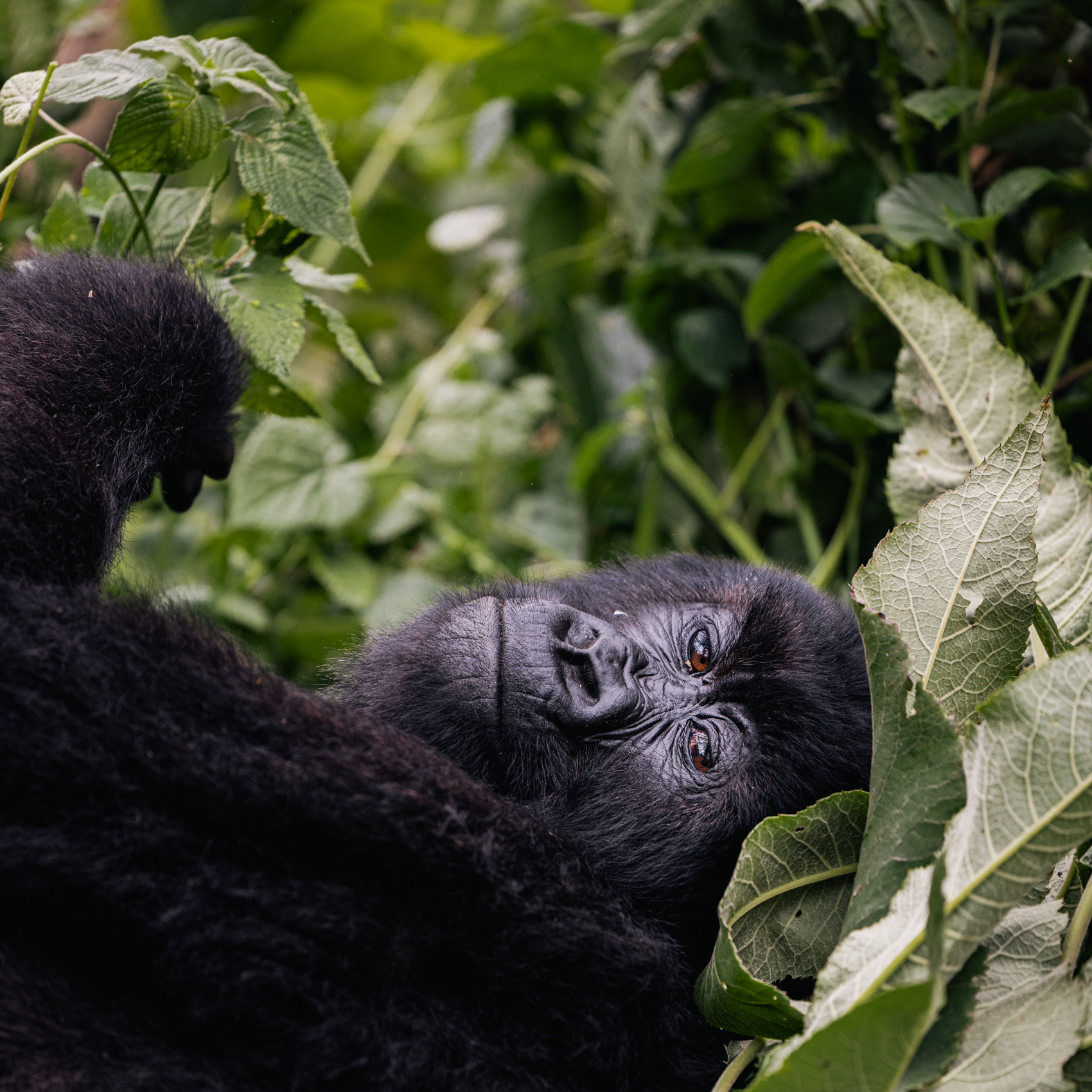
Under the jungle canopy, I looked for subjects in scattered pockets of light. One was a female, lounging in the leaves—relaxed, then playful, then posing like an experienced model. She knew exactly where the camera was, trying a few different poses.
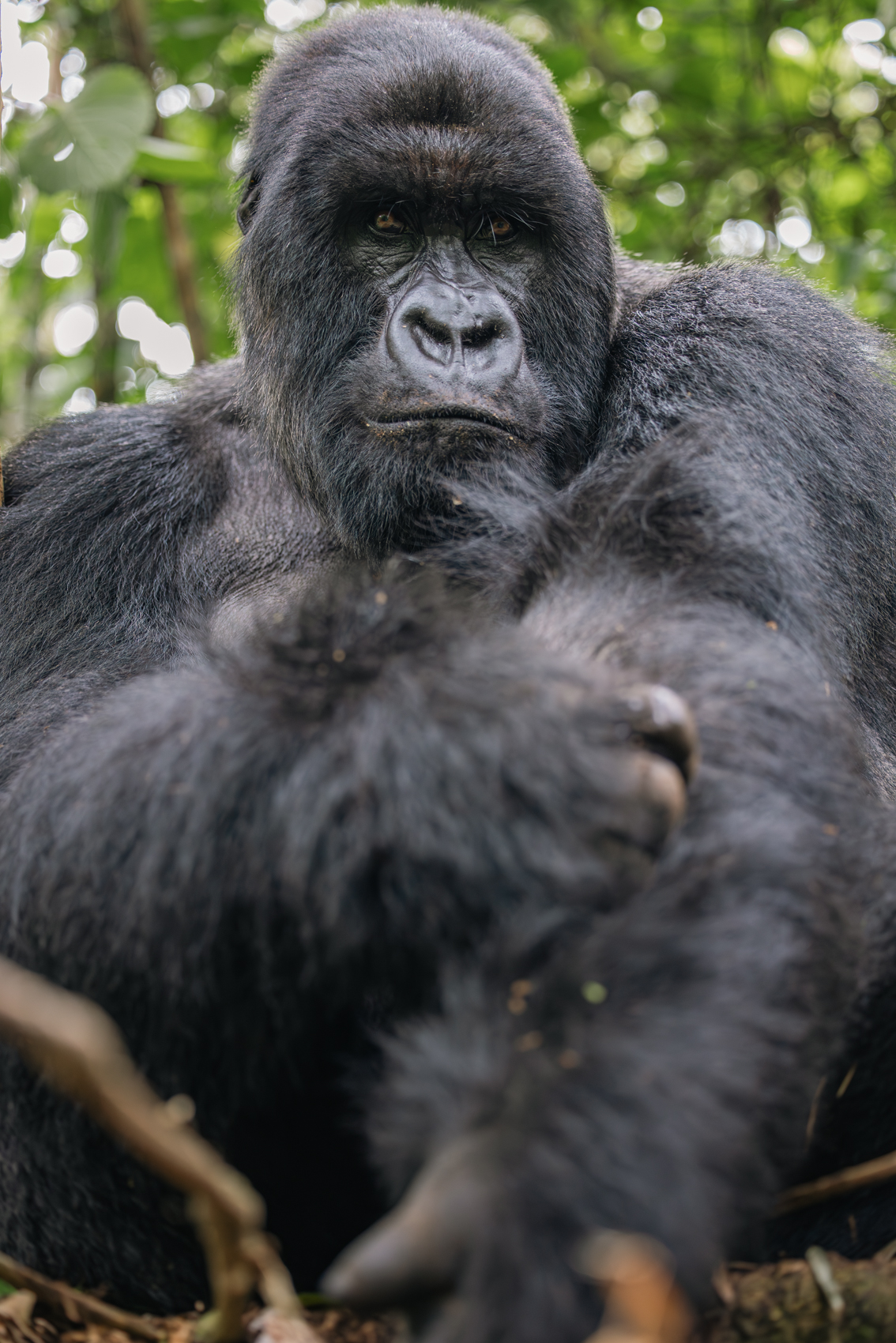
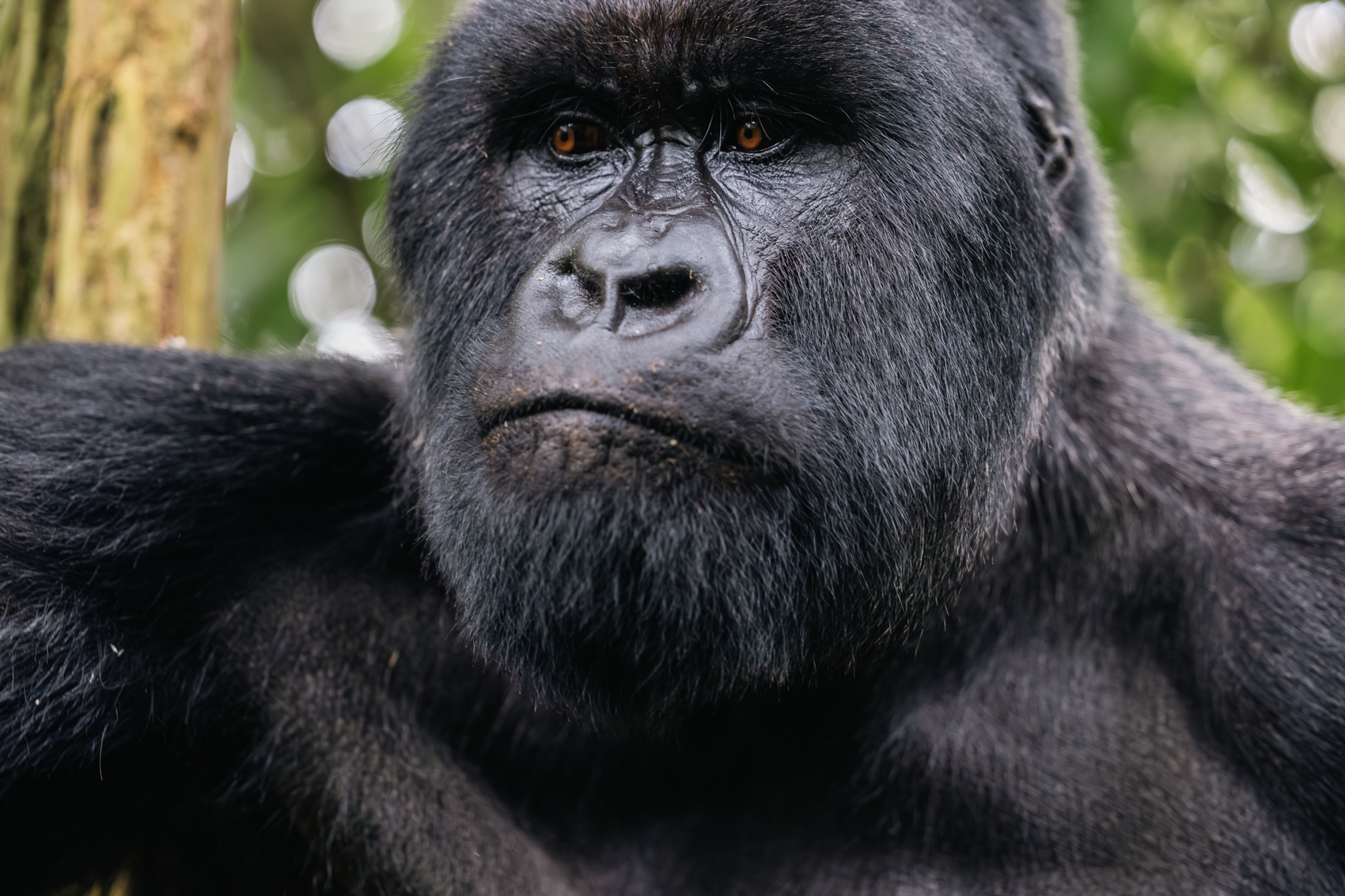
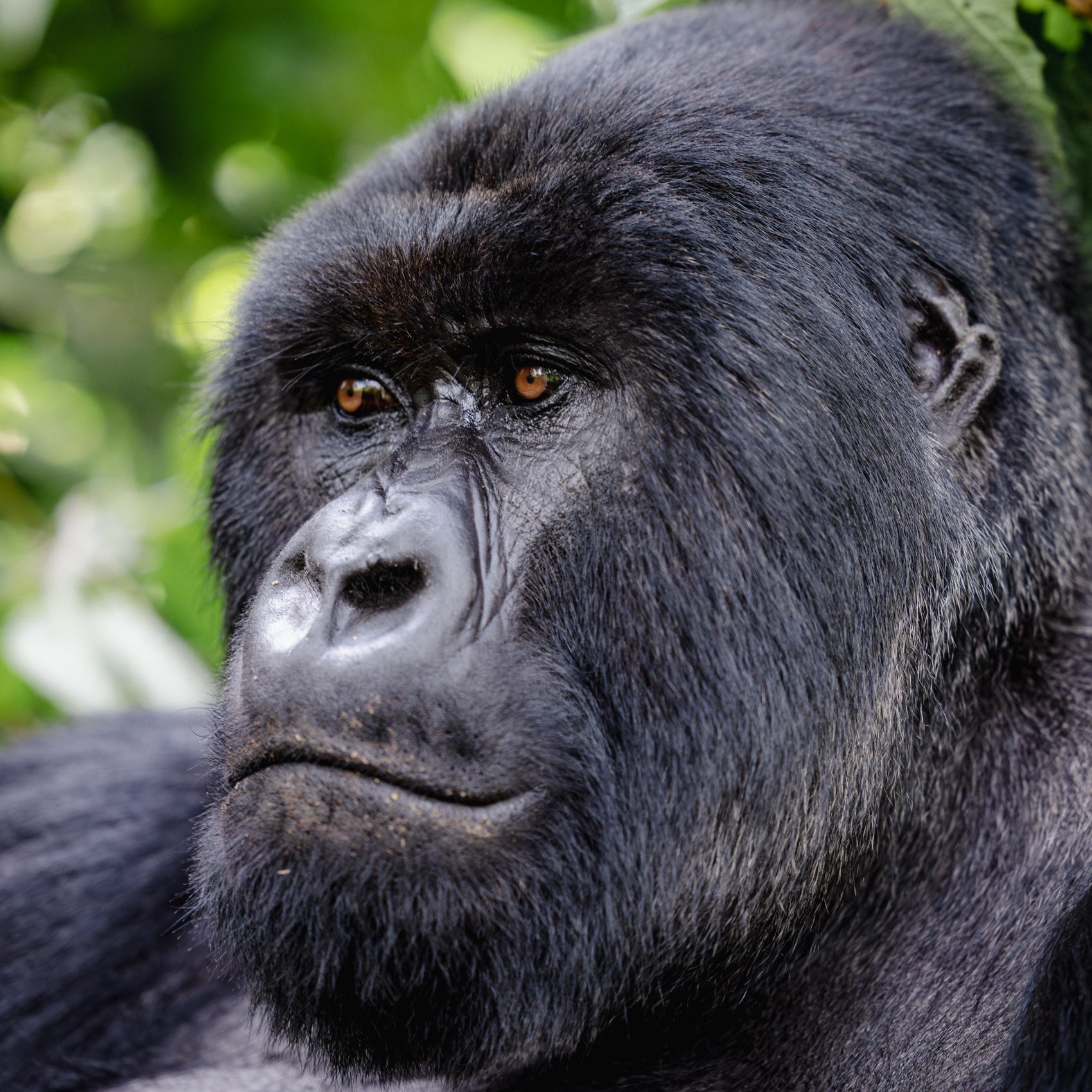
One of thesilverbacks didn't seem to appreciate the photo shoot. I heard branches snap behind me and turned to see him barreling forward. He gave me a shoulder check and sat between me and the female. I crab-shuffled aside, just in case he felt the need to elaborate.
With wild encounters, take your cue from the guides. Mine broke into laughter. It was clear there was no real threat, so this burly silverback became my next subject.
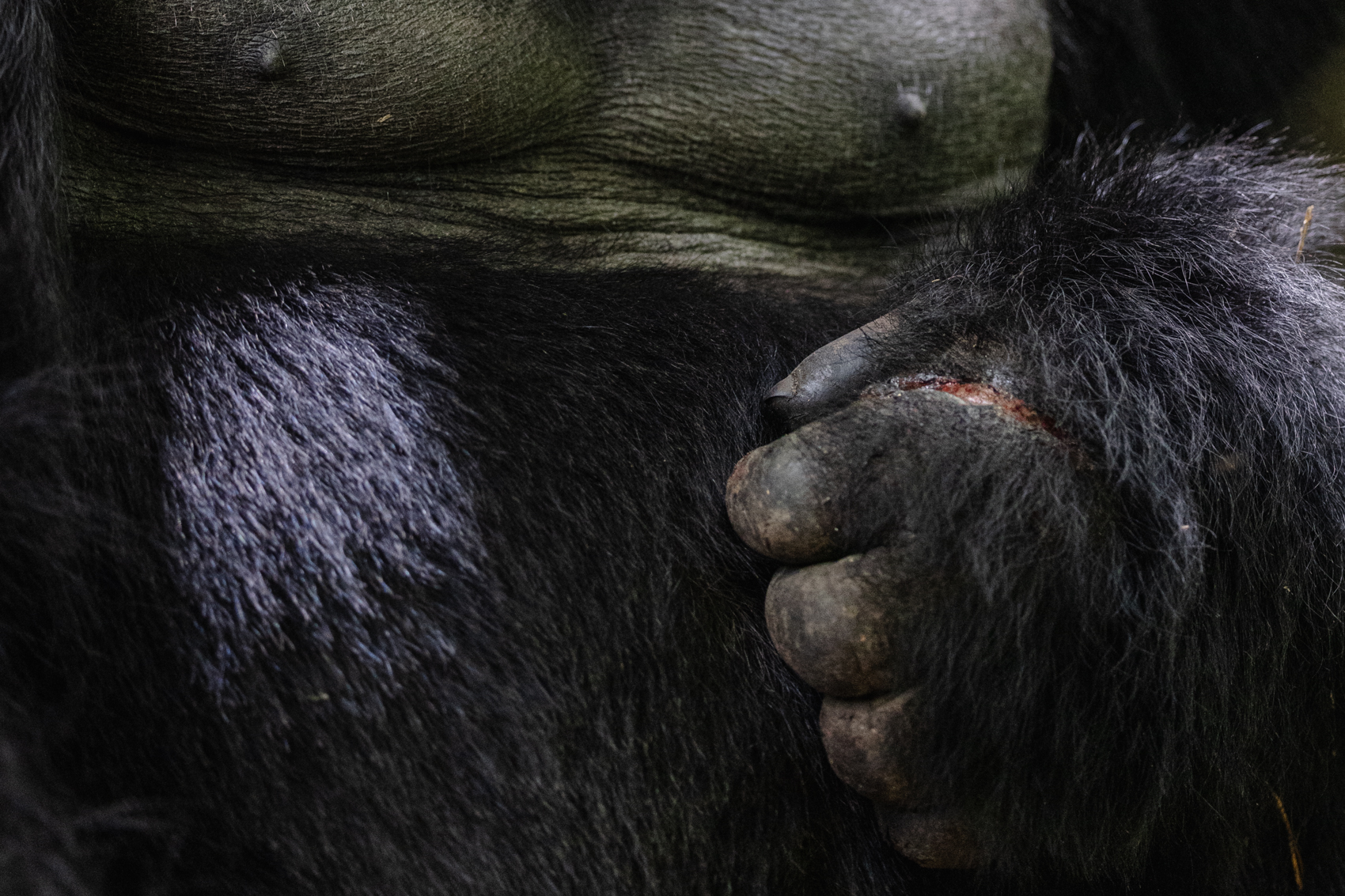
His size, his posture, his gaze, and the fresh wound across his hand—all spoke to his role.
He was the enforcer.

LIMITED EDITION
A moment captured for a life on paper.
Eric works with a renowned print studio in Brooklyn, New York, known for decades of expertise in archival pigment printing. The local lab allows for a collaborative approach, ensuring that his intended vision is expressed in the final artwork. When cared for properly, archival pigment prints can last for over a century.
Archival Pigment Prints
Modern printmaking, refined. Pigment prints utilize state-of-the-art digital technology and high-quality pigment-based inks to achieve striking reproductions. A digital image is applied directly onto the paper using precision inkjet printers, ensuring both image quality and longevity.
Vision meets the surface. Archival papers differ in weight, material, and texture. A paper is chosen to best suit the intent of the piece, from satin finishes to enhance rich shadows and colors, to handmade Japanese rice paper that offers a more textured and vintage feel.
The edition size ensures that only the number of prints indicated will ever be produced. Each print is proofed, reviewed, numbered, and signed by Eric, and includes a Certificate of Authenticity that is unique to your artwork.
Prices from $3,500 USD
20'' x 20'' / 50.8 × 50.8 cm
Edition of 10 + 2 AP
30'' x 30'' / 76.2 x 76.2 cm
Edition of 7 + 2 AP
45'' x 45'' / 114.3 x 114.3 cm
Edition of 5 + 2 AP
57'' x 57'' / 144.8 x 144.8 cm
Edition of 3 + 2 AP
15'' x 15'' / 38.1 x 38.1 cm
Edition of 3 + 2 AP
Larger pieces available by commission
Treks are limited to one hour with the gorillas. But between the amount of action around you and the acrobatics of navigating the foliage, it feels like both the shortest and longest hour imaginable.
There’s an abundance of opportunities—just the challenge of choosing the right ones.


.webp)

Pigment-based inks and precision digital technology achieve striking reproductions. Each image is applied directly onto archival paper using high-fidelity inkjet printers, ensuring both image quality and longevity.

Archival papers differ in weight, material, and texture. Each is chosen to best suit the intent of the piece—from satin finishes that enhance shadows and color, to washi that offers a textured, tactile feel.
Silver gelatin prints are produced using traditional darkroom techniques that date back to the early 20th century. The image is exposed onto paper coated with a light-sensitive silver salt emulsion and developed through chemical processing.
The paper's gelatin layer captures intricate details and textures within an image. Prints reveal rich blacks and a broad tonal range, giving each piece a distinct dimensionality.
Each edition is strictly limited to the number of prints indicated. Every work is proofed, reviewed, signed, and accompanied by a numbered Certificate of Authenticity.
A select number of Artist Proofs are reserved for the artist, family, or collectors.
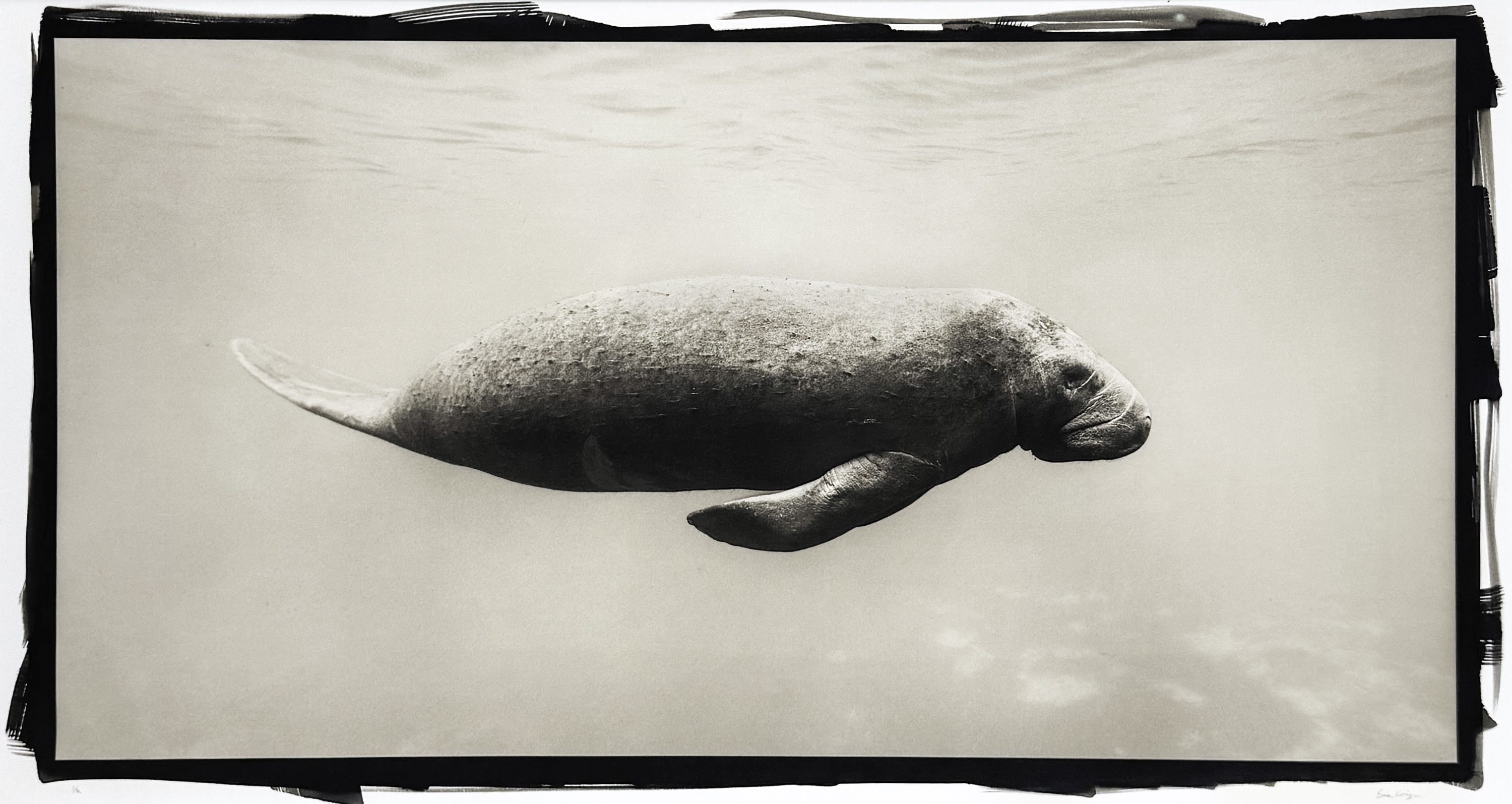
Platinum-palladium printing originated in the 19th century. It is a manual process requiring extensive preparation and craftsmanship, and some of the rarest metals on earth.
A digital photograph is converted to a negative of the image, which is then used in this traditional contact printing method.
Rich blacks, soft grays, and detail in shadows are unmatched, even by modern inkjet printers. Smooth tonal transitions and a warm appearance create a print that is uniquely platinum.
Black brush strokes around the edge of the image from the chemical application reveal the handmade nature of the piece—no two will ever be the same.
Platinum-palladium prints have an archival rating of more than 1,500 years.
A solution of noble metals is used to coat the paper, allowing for the print's longevity. When ultraviolet light is exposed through this digital negative onto the chemical layer, platinum particles become physically embedded in the fibers of the paper. These particles form the image, which is then developed in a chemical bath.
Each edition is strictly limited to the number of prints indicated. Every work is proofed, reviewed, signed, and accompanied by a numbered Certificate of Authenticity.
A select number of Artist Proofs are reserved for the artist, family, or collectors.
For additional information on this print, including availability, pricing, or edition details, please complete the form below.





.jpg)


.jpg)
.jpg)

%20srgb.jpg)