


Desperate times call for desperate measures.
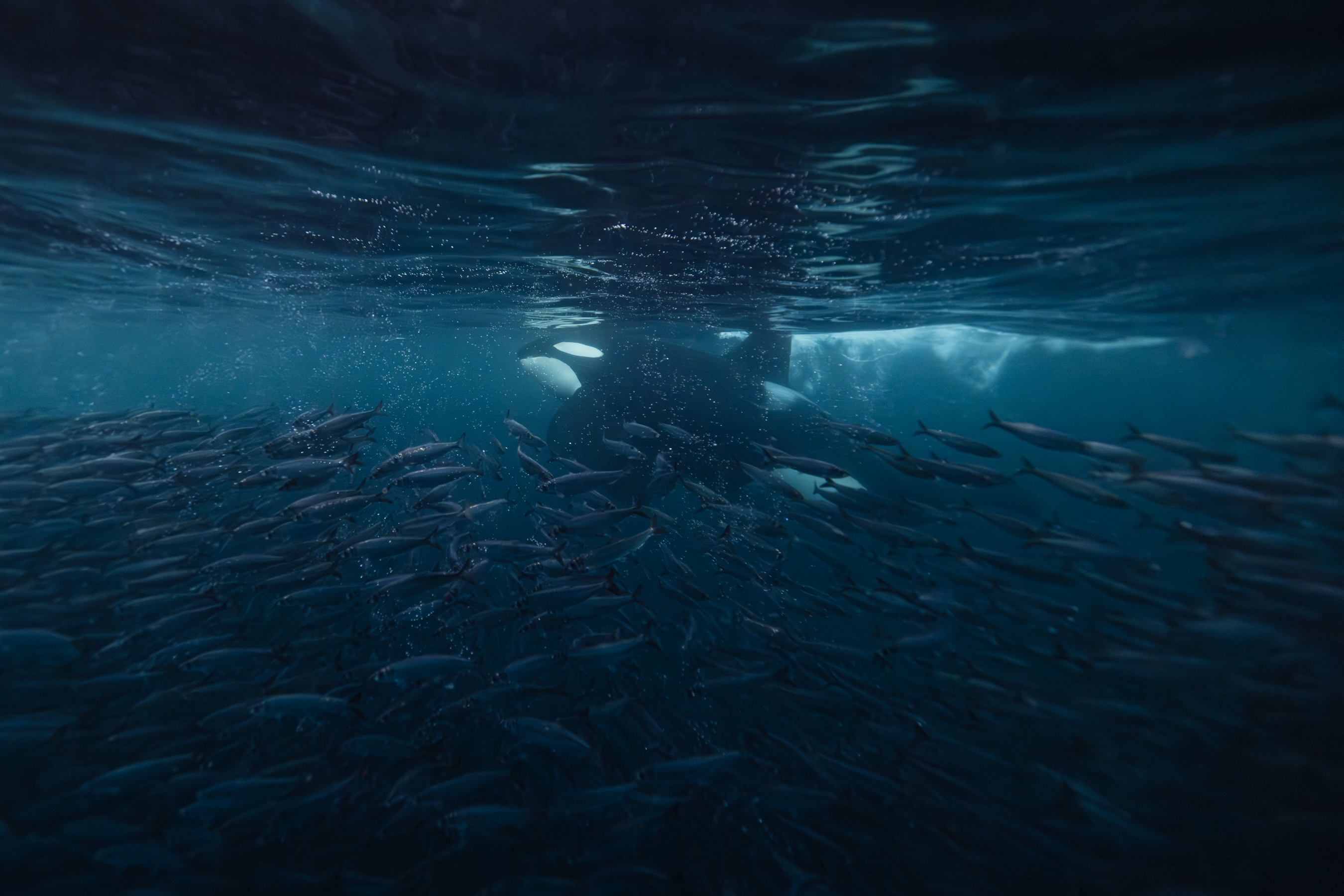
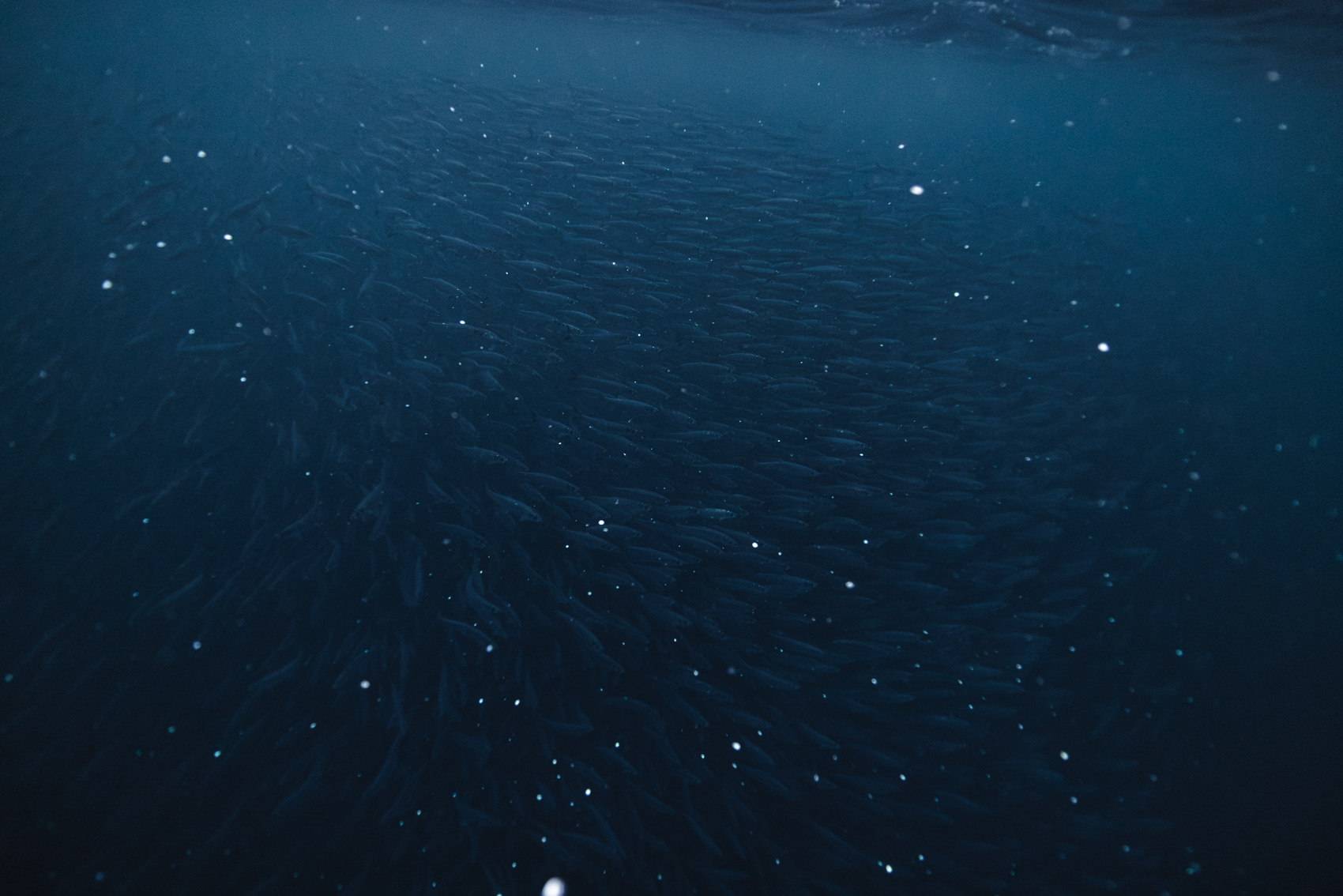
The formation of a bait ball is a last-ditch effort for survival. But for many herring, this will be their closing act—swimming in tandem as the walls close in.
The instinct to group together stems from a fundamental survival premise: you're more likely to be eaten alone than in a crowd. The flaw in that strategy becomes apparent when baleen whales arrive. Lunging from below, the giants engulf thousands of gallons of water—and with it, massive quantities of fish.
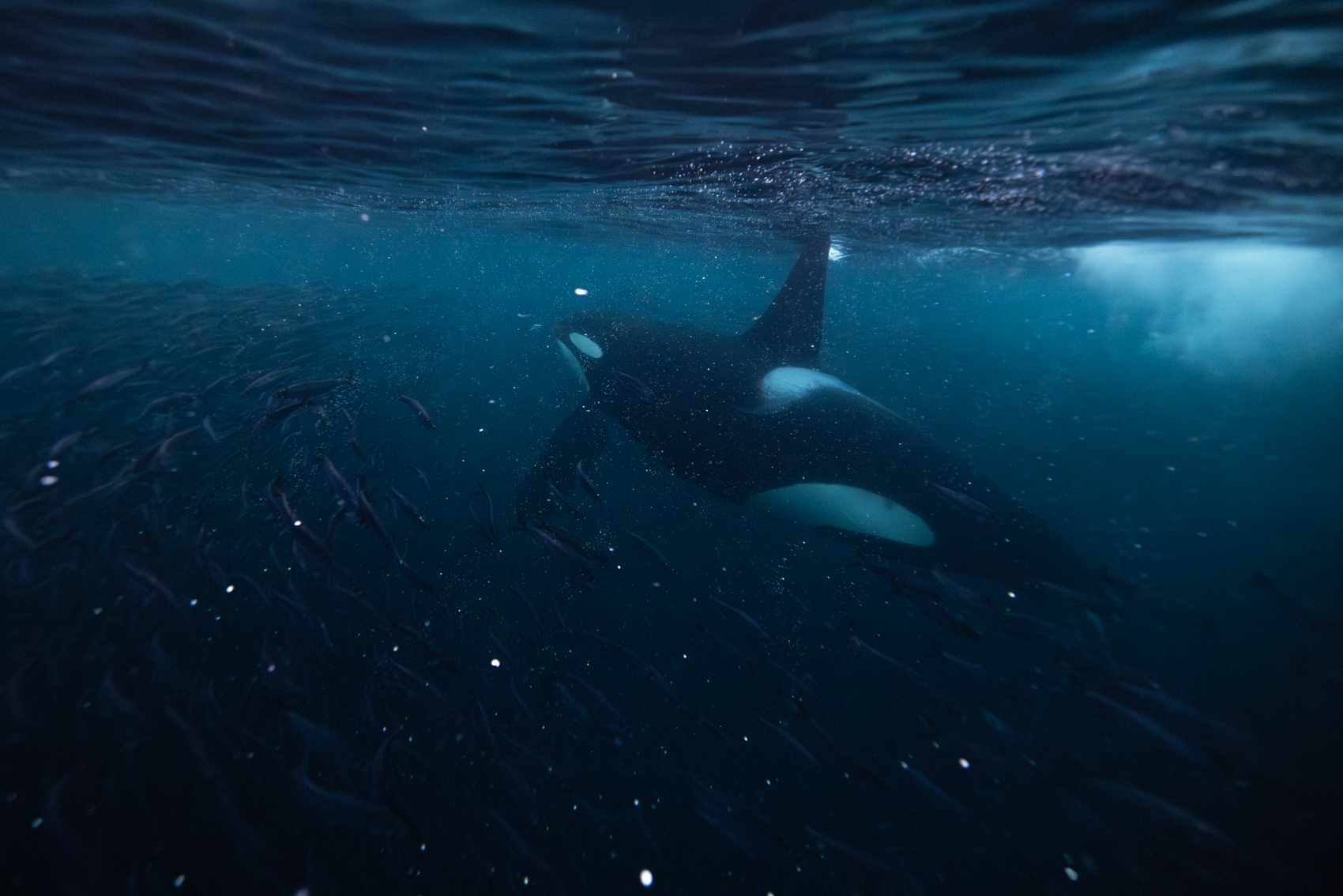
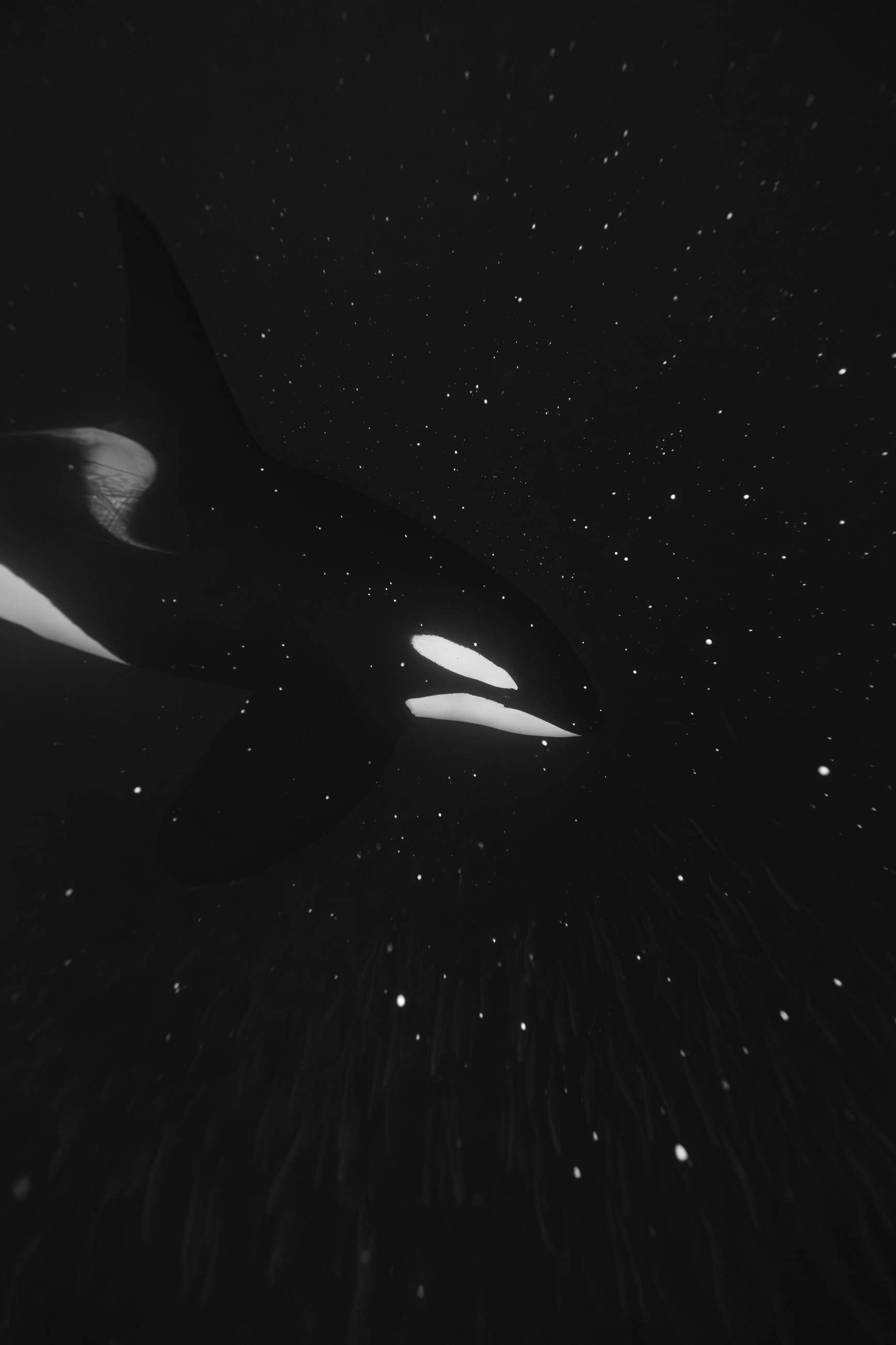
If you’ve seen footage of orcas hunting—flipping seals off blocks of ice, steamrolling great whites, exhausting juvenile whales—you might expect them to use similar brute-force tactics with the herring.
But instead of crashing through the bait ball to devour as many fish as possible, these orcas resemble something closer to an omakase chef: disciplined and deliberate.
In a world of choice, the whales single out a herring—expertly filleting it for the fattiest sections and leaving the rest.
After the chaos subsides, what remains resembles a pescatarian’s crime scene—stunned fish from the slap of a tail, some half-eaten and barely alive, others recently deceased—all suspended in a galaxy of shimmering scales, set to the high-pitched whistles of the hunters.
This is the plight of the herring—caught in the relentless dance of survival, but so often behind the bait ball.

LIMITED EDITION
A moment captured for a life on paper.
Eric works with a renowned print studio in Brooklyn, New York, known for decades of expertise in archival pigment printing. The local lab allows for a collaborative approach, ensuring that his intended vision is expressed in the final artwork. When cared for properly, archival pigment prints can last for over a century.
Archival Pigment Prints
Modern printmaking, refined. Pigment prints utilize state-of-the-art digital technology and high-quality pigment-based inks to achieve striking reproductions. A digital image is applied directly onto the paper using precision inkjet printers, ensuring both image quality and longevity.
Vision meets the surface. Archival papers differ in weight, material, and texture. A paper is chosen to best suit the intent of the piece, from satin finishes to enhance rich shadows and colors, to handmade Japanese rice paper that offers a more textured and vintage feel.
The edition size ensures that only the number of prints indicated will ever be produced. Each print is proofed, reviewed, numbered, and signed by Eric, and includes a Certificate of Authenticity that is unique to your artwork.
Prices from $3,500 USD
16'' x 24'' / 40.6 x 61 cm
Edition of 10 + 2 AP
24'' x 36'' / 61 x 91.4 cm
Edition of 7 + 2 AP
12'' x 18'' / 30.5 x 45.7 cm
Edition of 3 + 2 AP
Larger pieces available by commission
Eight millimeters of neoprene are your only buffer—between you, the biting wind, the frigid water, the swirling mass of herring, and the ocean’s ultimate predator. There’s discomfort in that thin barrier, but I wouldn’t trade the closeness for anything.



.webp)

Pigment-based inks and precision digital technology achieve striking reproductions. Each image is applied directly onto archival paper using high-fidelity inkjet printers, ensuring both image quality and longevity.

Archival papers differ in weight, material, and texture. Each is chosen to best suit the intent of the piece—from satin finishes that enhance shadows and color, to washi that offers a textured, tactile feel.
Silver gelatin prints are produced using traditional darkroom techniques that date back to the early 20th century. The image is exposed onto paper coated with a light-sensitive silver salt emulsion and developed through chemical processing.
The paper's gelatin layer captures intricate details and textures within an image. Prints reveal rich blacks and a broad tonal range, giving each piece a distinct dimensionality.
Each edition is strictly limited to the number of prints indicated. Every work is proofed, reviewed, signed, and accompanied by a numbered Certificate of Authenticity.
A select number of Artist Proofs are reserved for the artist, family, or collectors.
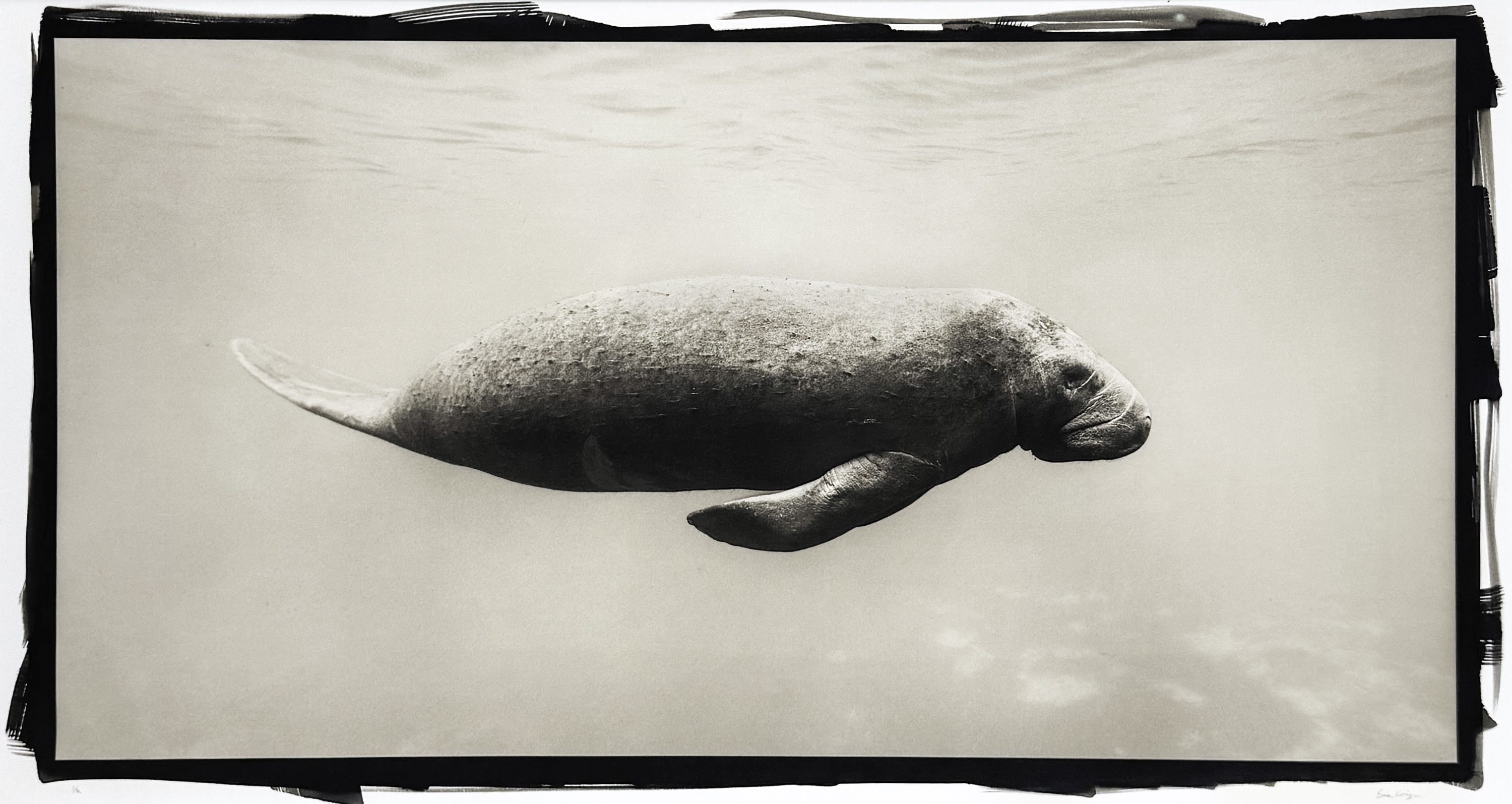
Platinum-palladium printing originated in the 19th century. It is a manual process requiring extensive preparation and craftsmanship, and some of the rarest metals on earth.
A digital photograph is converted to a negative of the image, which is then used in this traditional contact printing method.
Rich blacks, soft grays, and detail in shadows are unmatched, even by modern inkjet printers. Smooth tonal transitions and a warm appearance create a print that is uniquely platinum.
Black brush strokes around the edge of the image from the chemical application reveal the handmade nature of the piece—no two will ever be the same.
Platinum-palladium prints have an archival rating of more than 1,500 years.
A solution of noble metals is used to coat the paper, allowing for the print's longevity. When ultraviolet light is exposed through this digital negative onto the chemical layer, platinum particles become physically embedded in the fibers of the paper. These particles form the image, which is then developed in a chemical bath.
Each edition is strictly limited to the number of prints indicated. Every work is proofed, reviewed, signed, and accompanied by a numbered Certificate of Authenticity.
A select number of Artist Proofs are reserved for the artist, family, or collectors.
For additional information on this print, including availability, pricing, or edition details, please complete the form below.





.jpg)


.jpg)
.jpg)

%20srgb.jpg)