


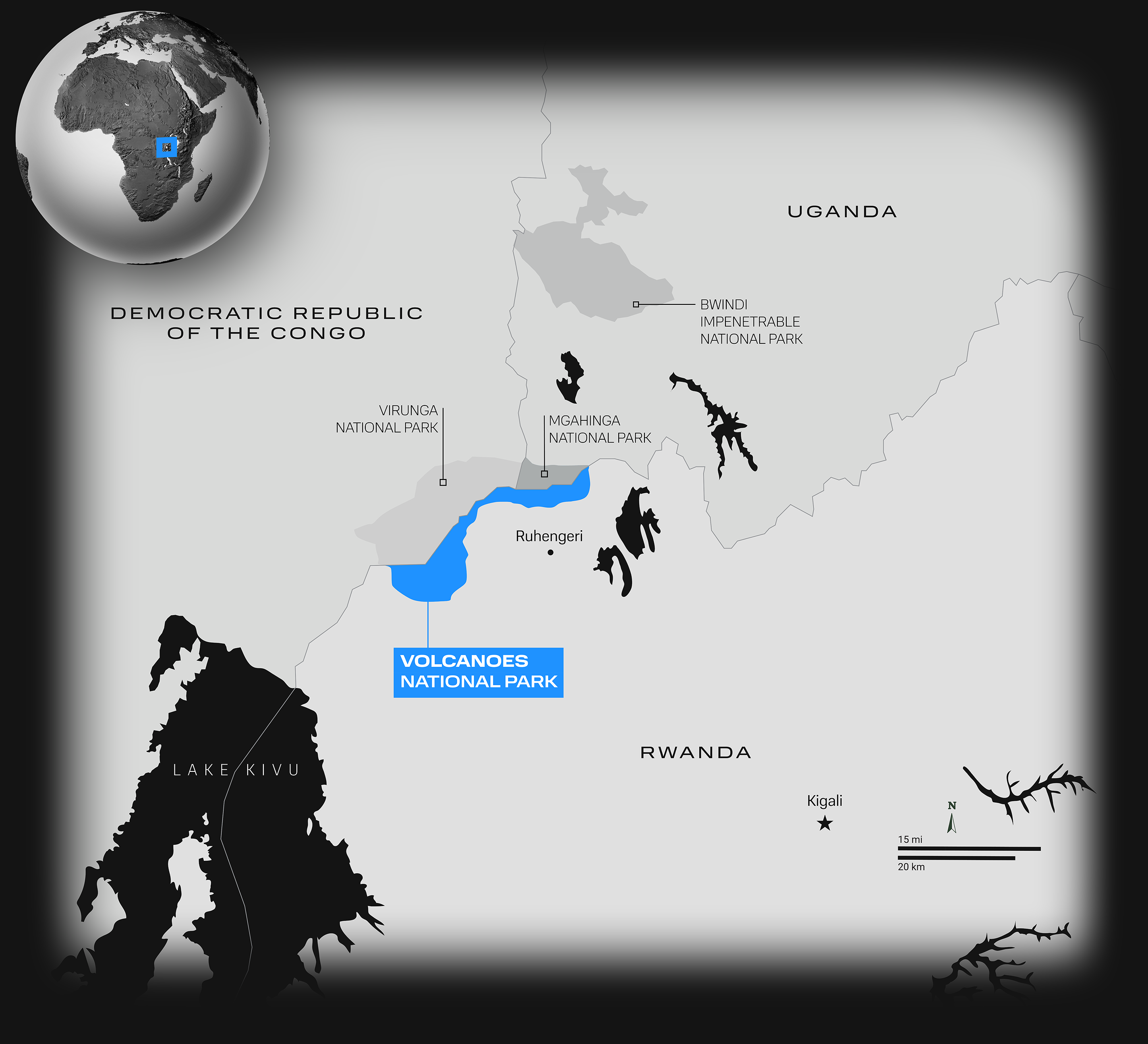
Scale a map of the African continent to a sheet of printer paper, and you’d find that the habitat area of the mountain gorilla is smaller than a penny.
It’s this question of land that stands at the heart of why these animals remain endangered today. Over 100,000 people live in areas surrounding the gorillas’ habitat, and the cultivation of the terrain has led this already confined habitat to further shrink over time. Poaching, civil war, and disease have also contributed to the deaths of these remarkable animals.
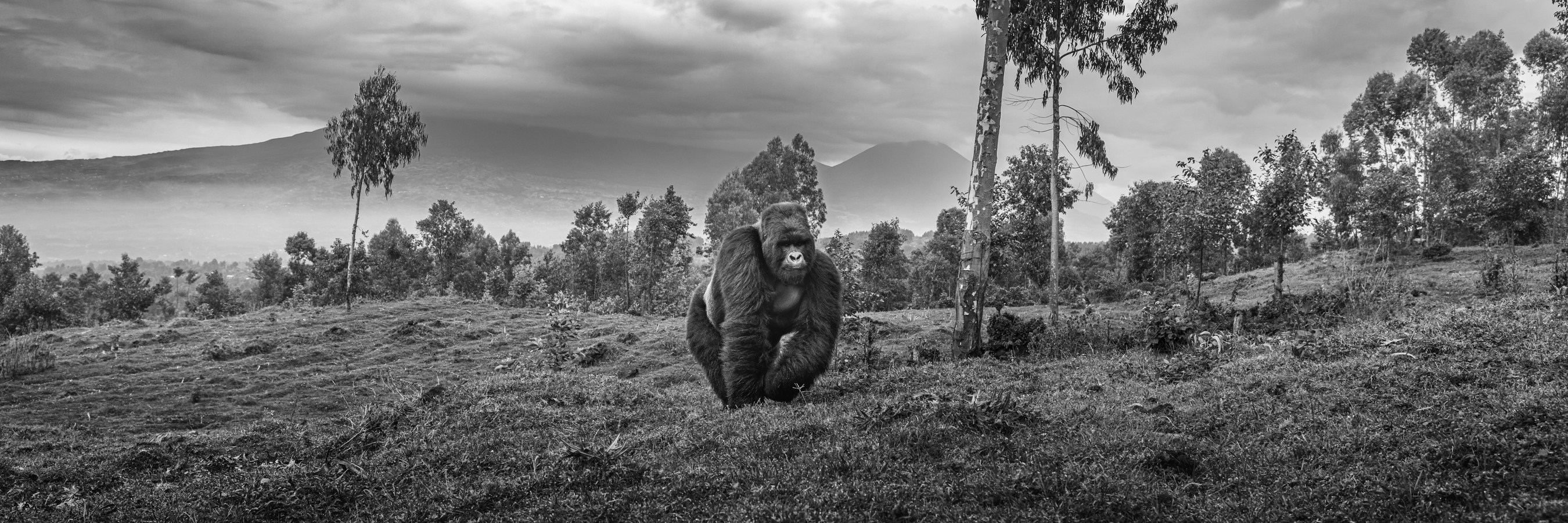
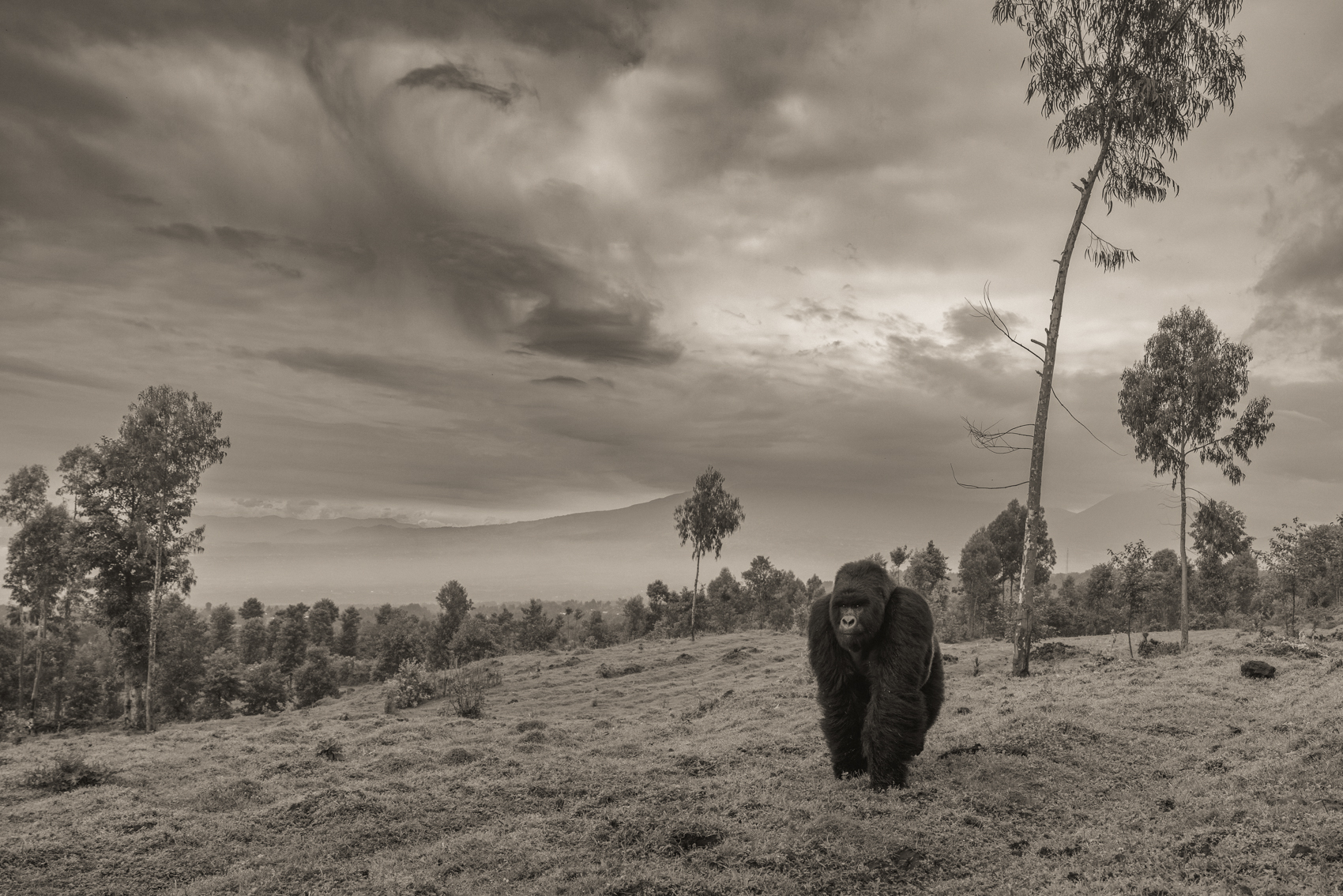
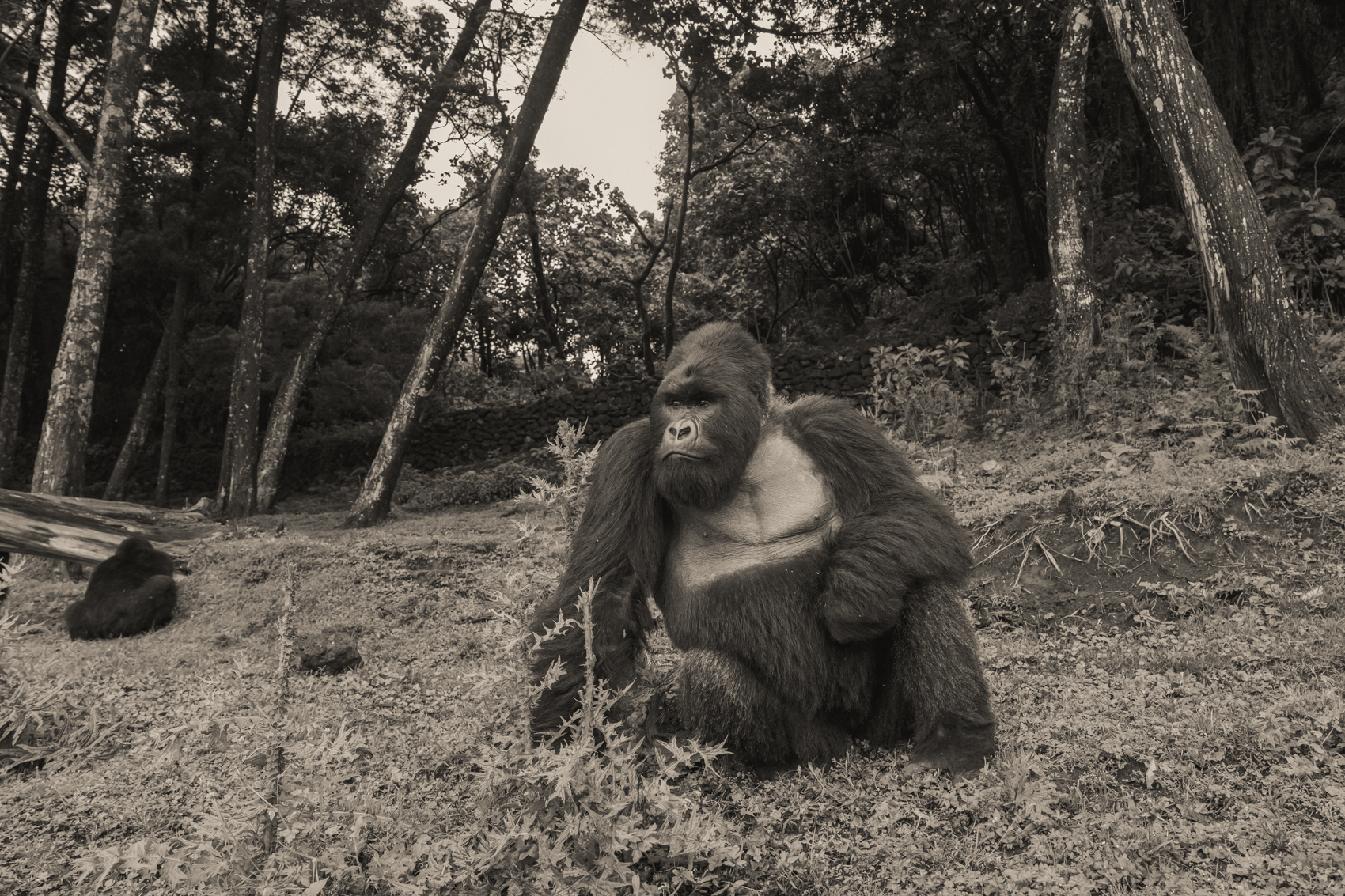
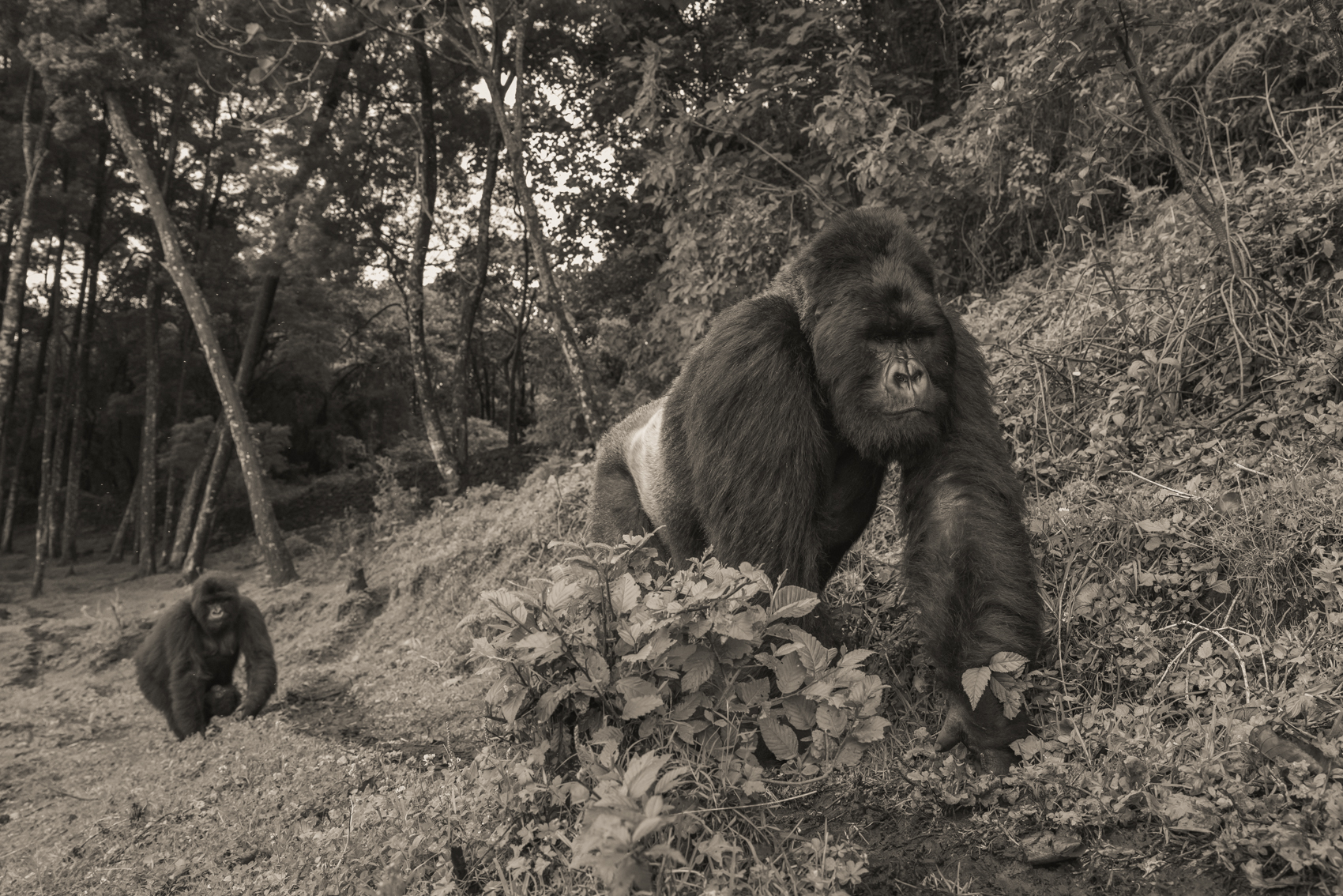
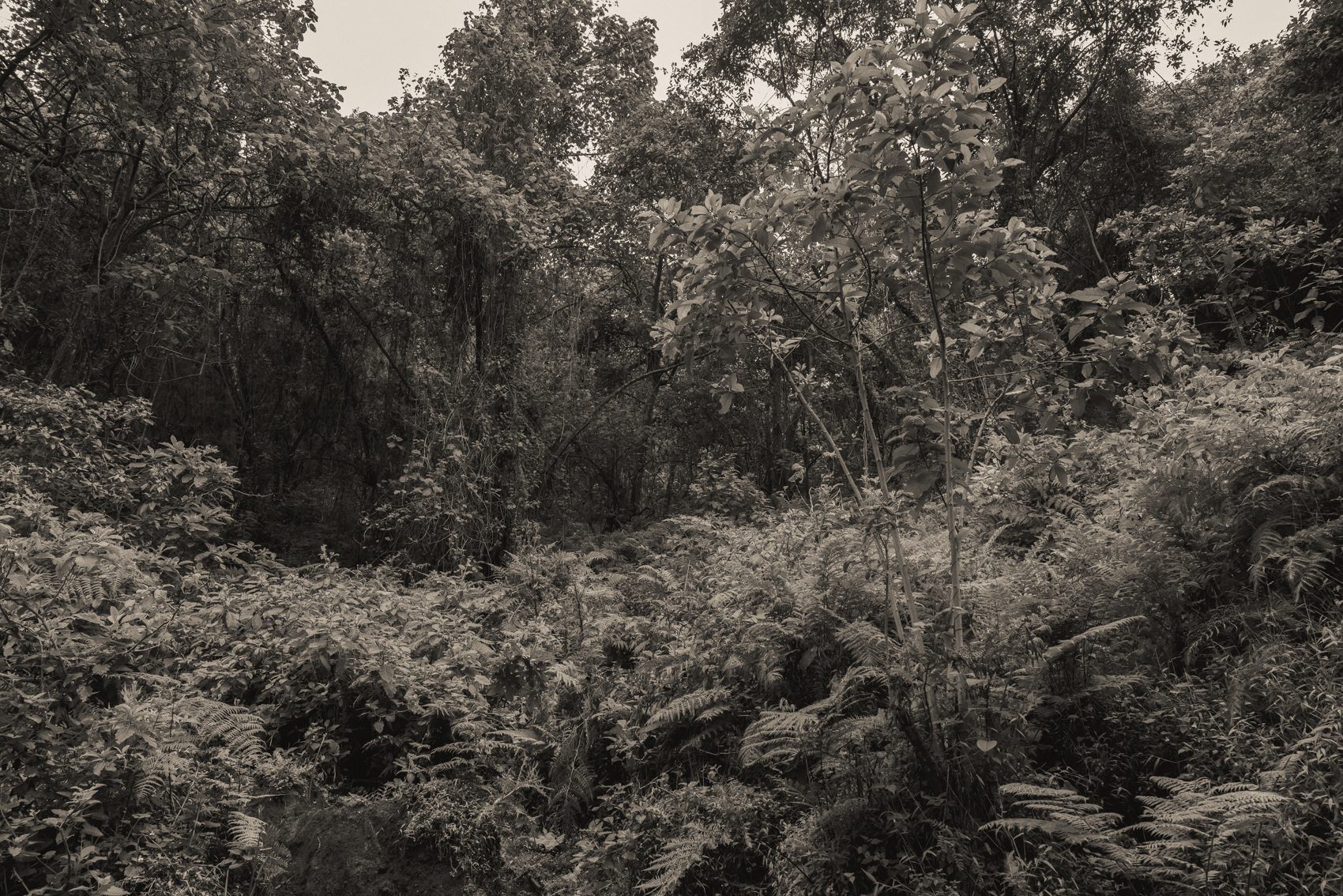
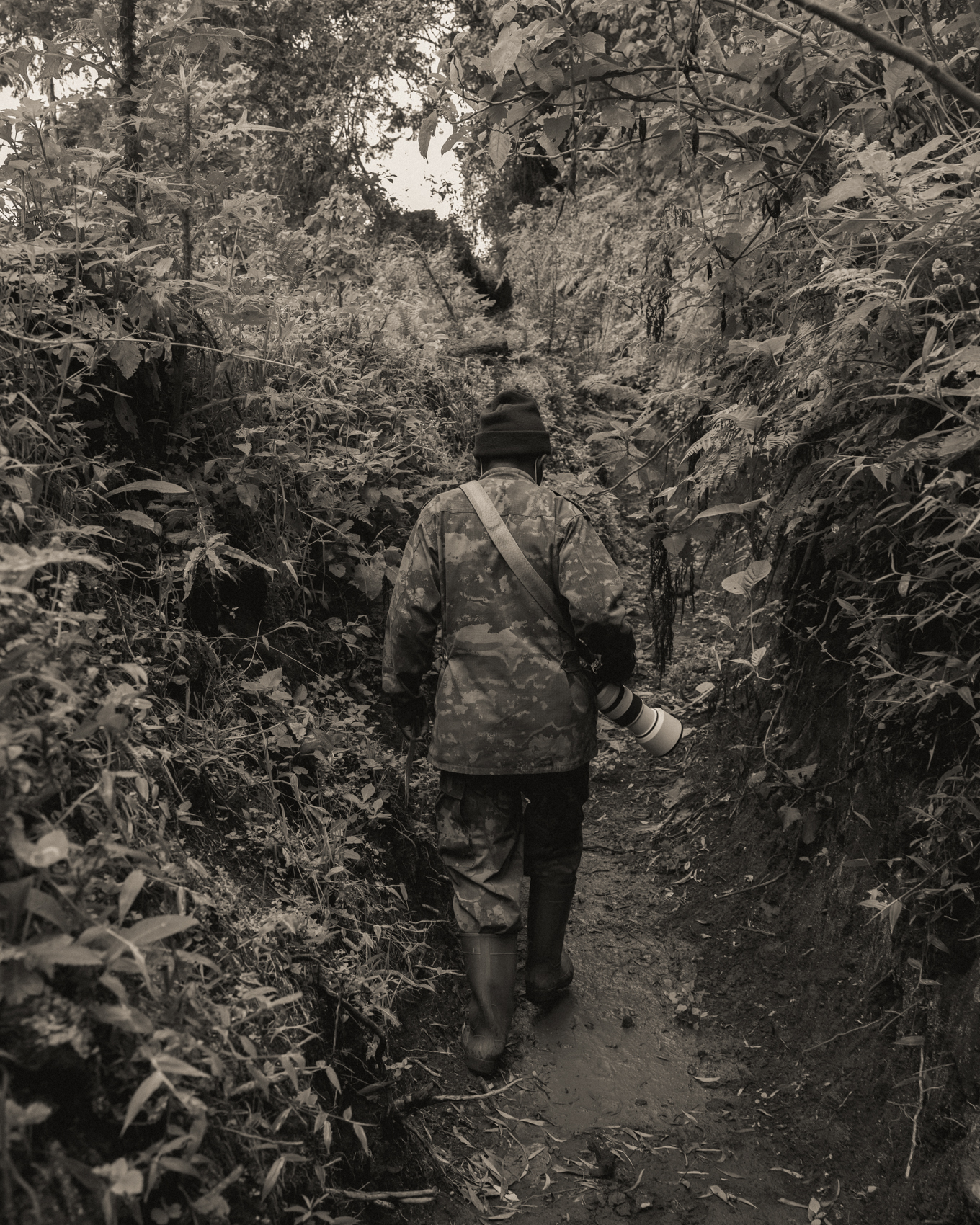
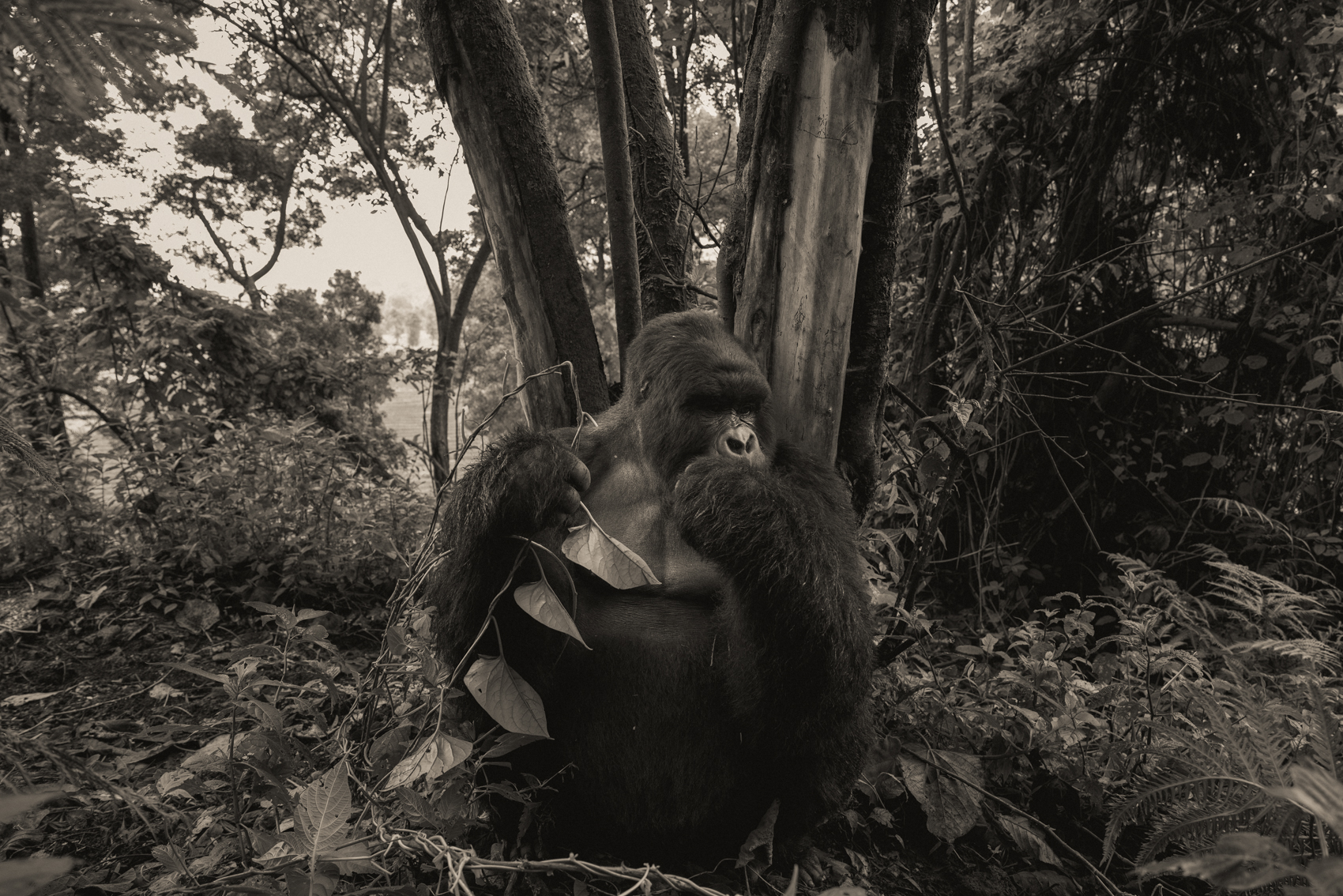
Having learned the importance of setting when photographing mountain gorillas the previous year, I spoke with my guides early this November morning to express my interest in a family positioned in a less obstructed area. Thick foliage conceals the broader scene, making it difficult to convey the impressive landscape that inspired the name of this subspecies.
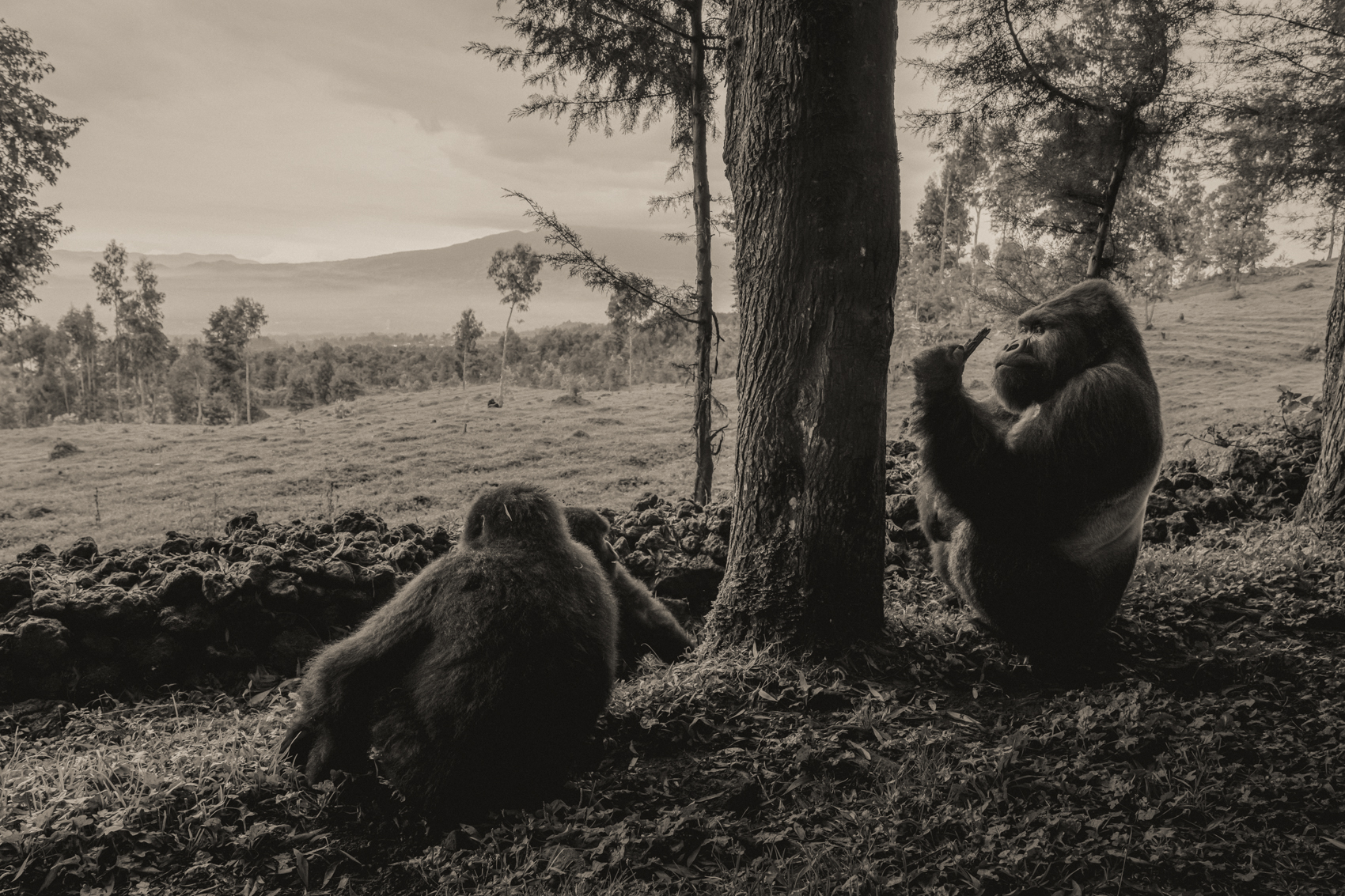
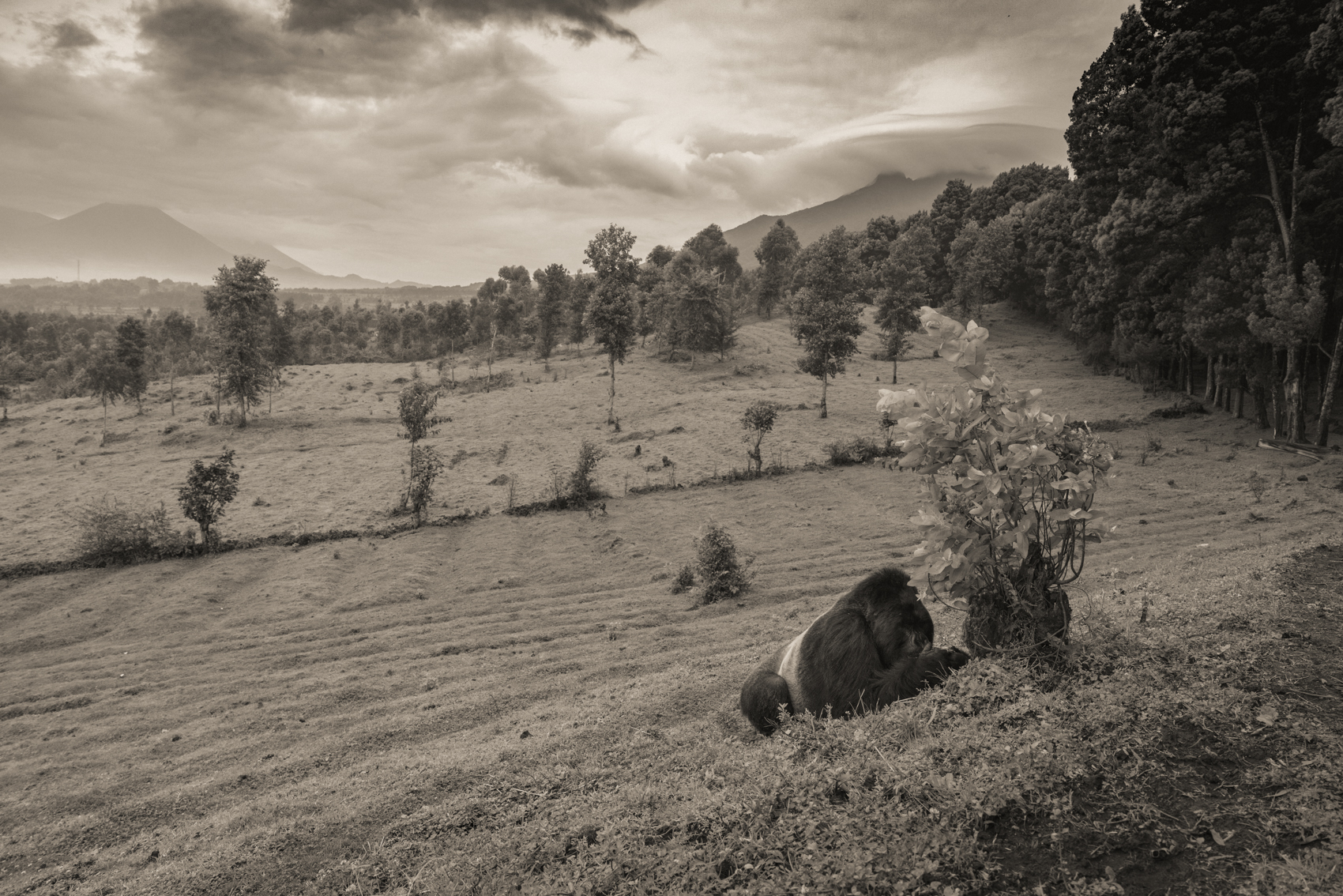
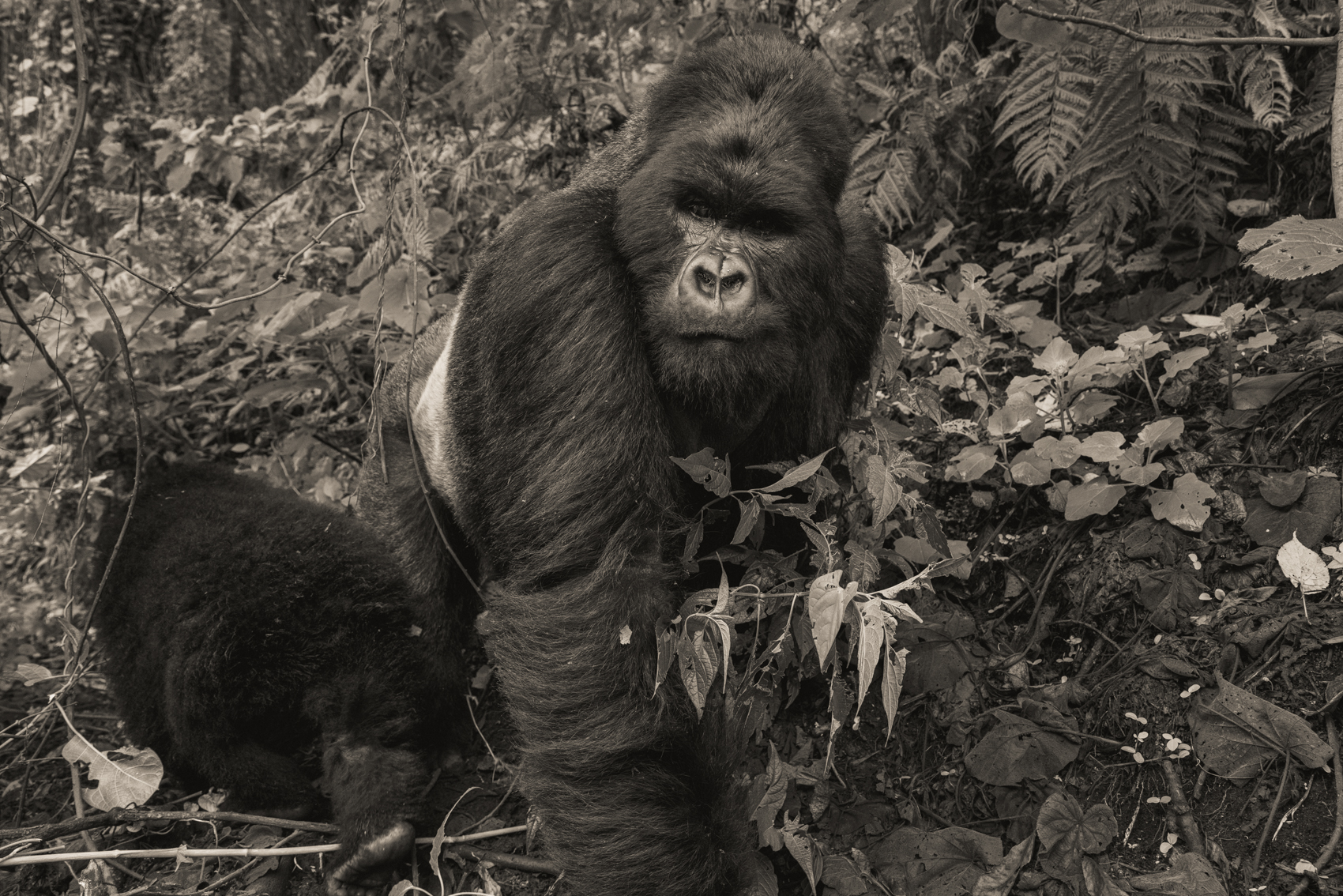
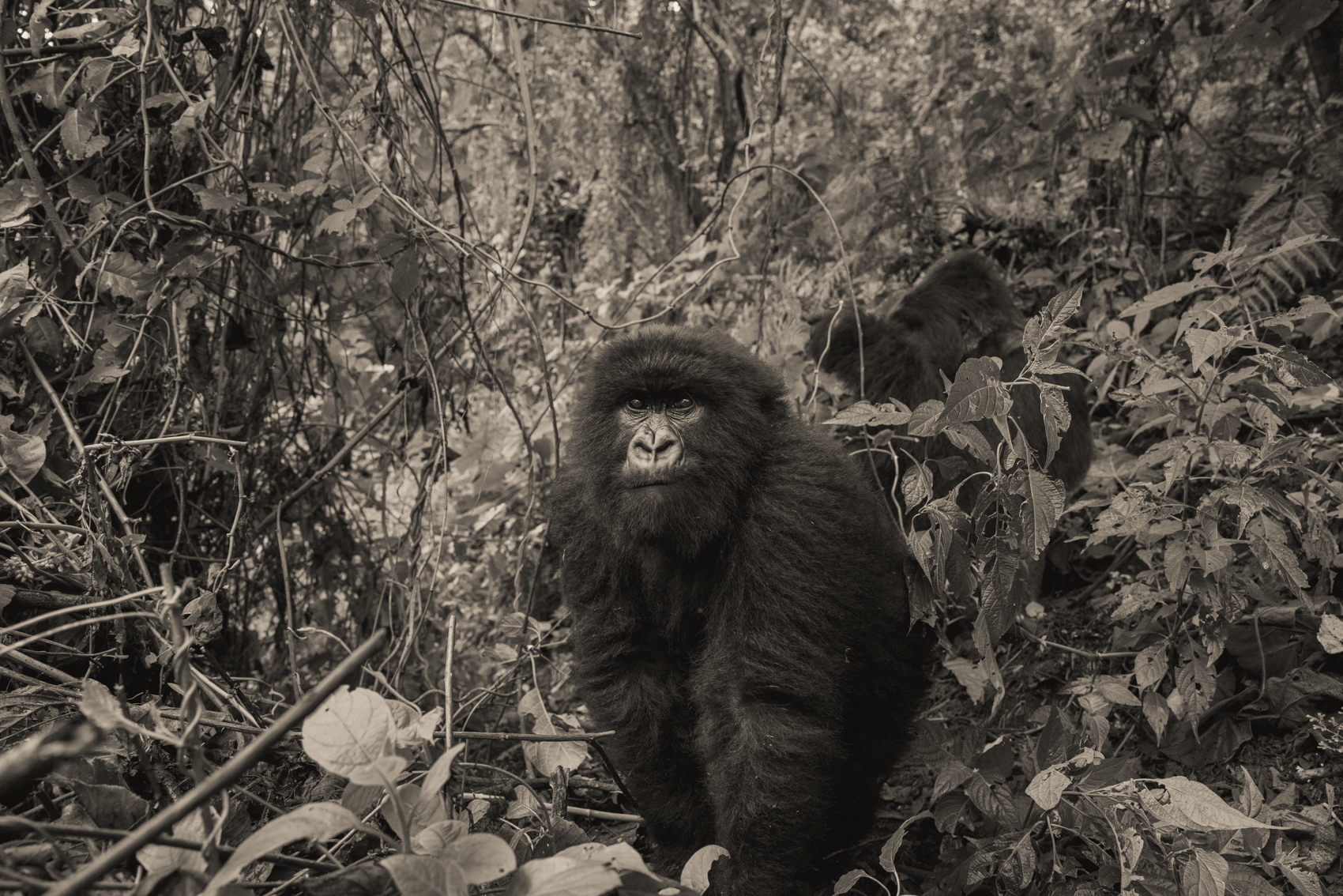
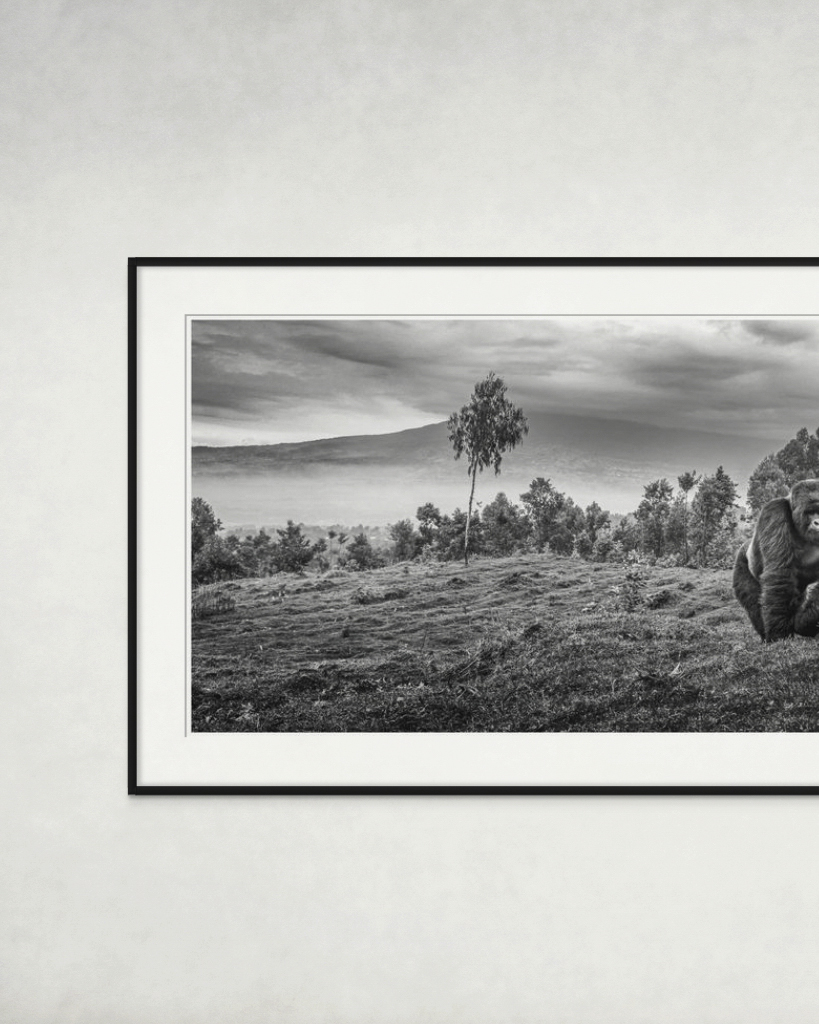
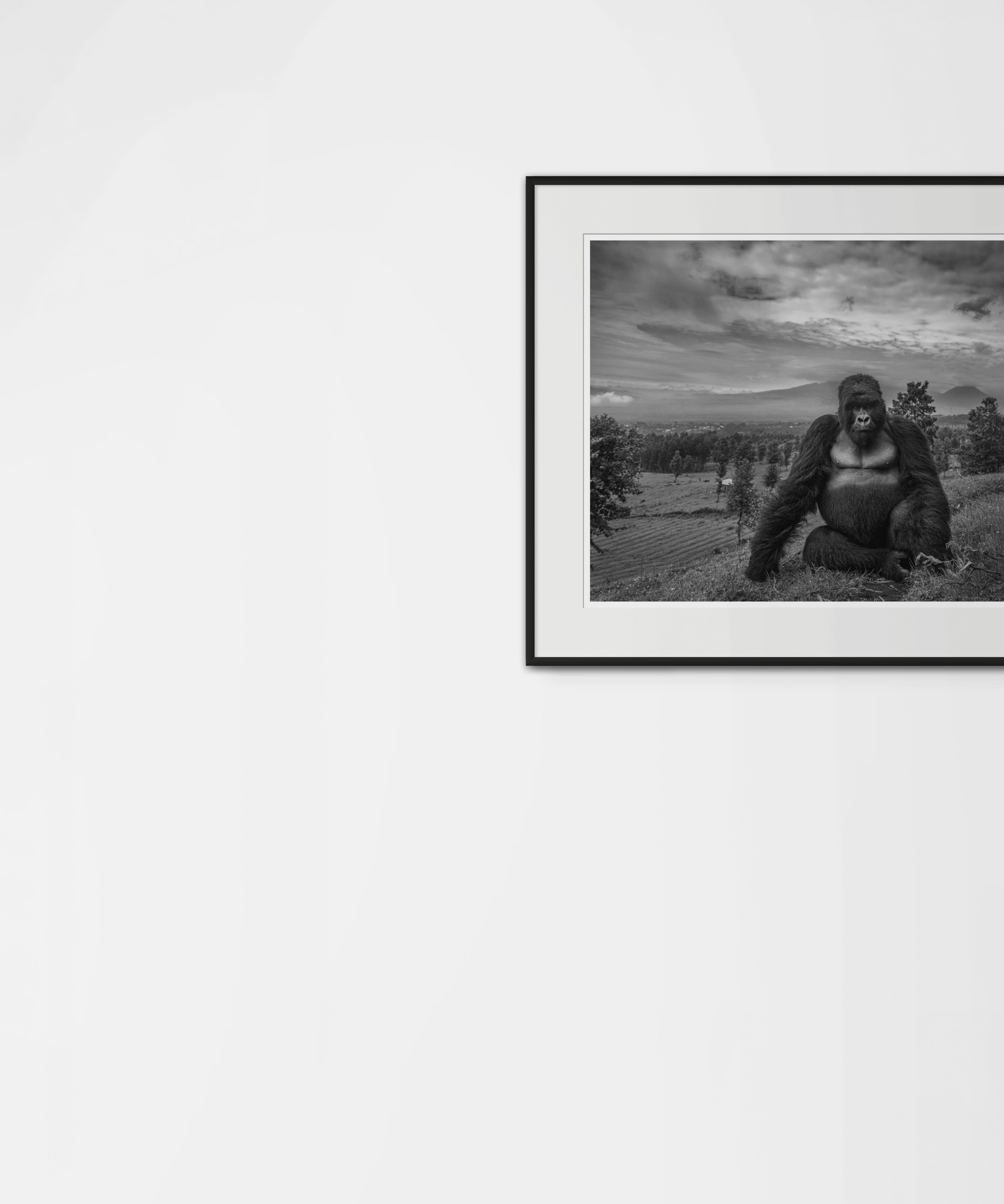
We arrived at the Kwitonda family to find them eating plants along the rock wall separating the farmland from the jungle. While cultivated land wasn’t what I originally had in mind as “open space,” I soon realized this was the story that needed to be told.
As the squeeze is placed on an already delicate space, scenes like this one are becoming more commonplace. Animals—once considered mythical figures of the jungle—now roam across land maintained by humans.
Life that marches very much on the edge.

LIMITED EDITION
A moment captured for a life on paper.
Eric works with a renowned print studio in Brooklyn, New York, known for decades of expertise in archival pigment printing. The local lab allows for a collaborative approach, ensuring that his intended vision is expressed in the final artwork. When cared for properly, archival pigment prints can last for over a century.
Archival Pigment Prints
Modern printmaking, refined. Pigment prints utilize state-of-the-art digital technology and high-quality pigment-based inks to achieve striking reproductions. A digital image is applied directly onto the paper using precision inkjet printers, ensuring both image quality and longevity.
Vision meets the surface. Archival papers differ in weight, material, and texture. A paper is chosen to best suit the intent of the piece, from satin finishes to enhance rich shadows and colors, to handmade Japanese rice paper that offers a more textured and vintage feel.
The edition size ensures that only the number of prints indicated will ever be produced. Each print is proofed, reviewed, numbered, and signed by Eric, and includes a Certificate of Authenticity that is unique to your artwork.
Prices from $3,500 USD
12'' x 36'' / 30.5 × 91.4 cm
Edition of 10 + 2 AP
18'' x 54'' / 45.7 x 137.2 cm
Edition of 7 + 2 AP
25'' x 75'' / 63.5 x 190.5 cm
Edition of 5 + 2 AP
30'' x 90'' / 76.2 x 228.6 cm
Edition of 3 + 2 AP
40'' x 120'' / 101.6 x 304.8 cm
Edition of 2 + 2 AP
7'' x 21'' / 17.8 x 53.3 cm
Edition of 3 + 2 AP
10'' x 30'' / 25.4 x 76.2 cm
Edition of 2 + 2 AP
Larger pieces available by commission
A morning that began with uncertainty and second-guessing became one of the most meaningful I’ve shared with these animals.

.webp)

Pigment-based inks and precision digital technology achieve striking reproductions. Each image is applied directly onto archival paper using high-fidelity inkjet printers, ensuring both image quality and longevity.

Archival papers differ in weight, material, and texture. Each is chosen to best suit the intent of the piece—from satin finishes that enhance shadows and color, to washi that offers a textured, tactile feel.
Silver gelatin prints are produced using traditional darkroom techniques that date back to the early 20th century. The image is exposed onto paper coated with a light-sensitive silver salt emulsion and developed through chemical processing.
The paper's gelatin layer captures intricate details and textures within an image. Prints reveal rich blacks and a broad tonal range, giving each piece a distinct dimensionality.
Each edition is strictly limited to the number of prints indicated. Every work is proofed, reviewed, signed, and accompanied by a numbered Certificate of Authenticity.
A select number of Artist Proofs are reserved for the artist, family, or collectors.
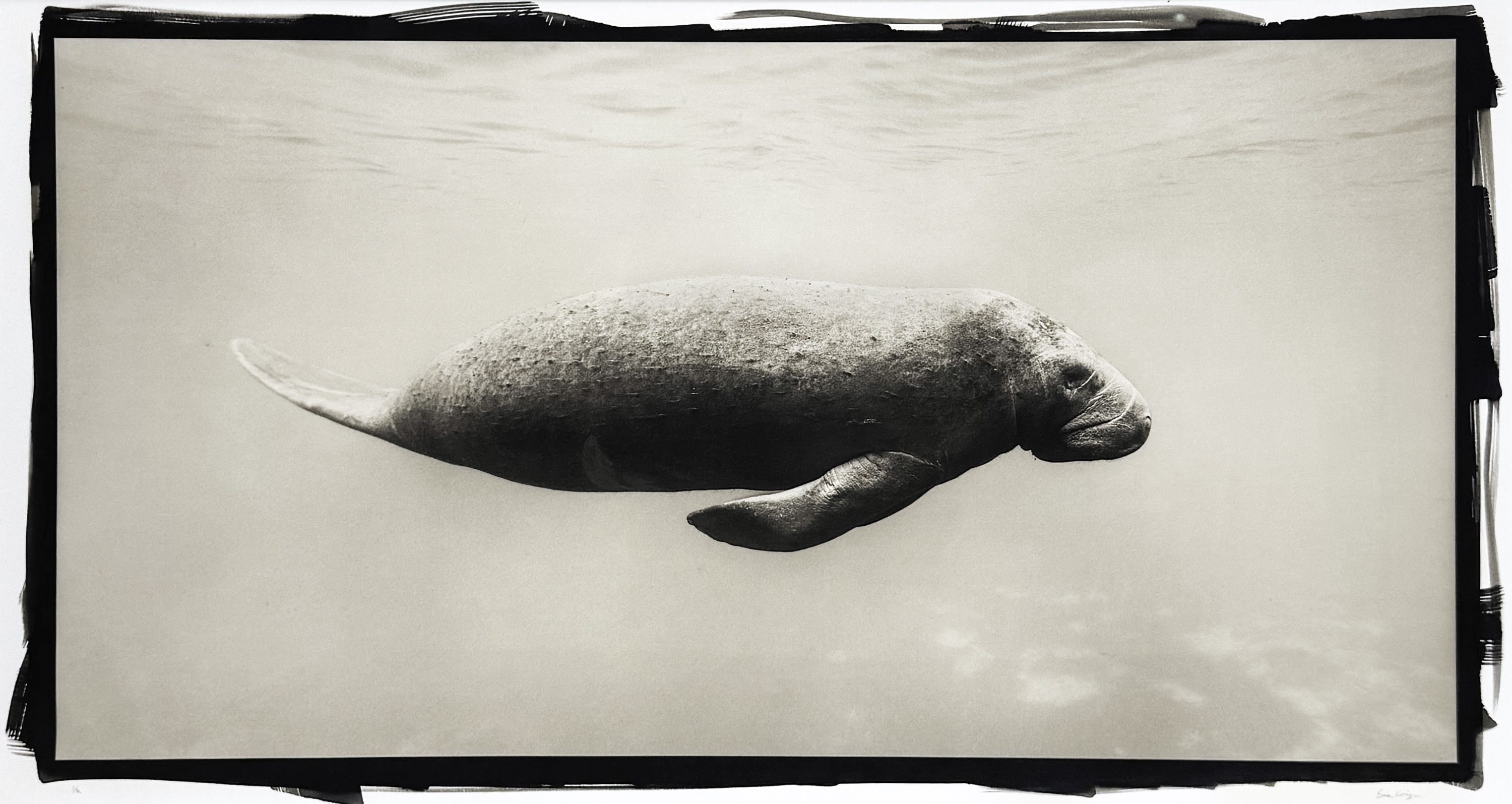
Platinum-palladium printing originated in the 19th century. It is a manual process requiring extensive preparation and craftsmanship, and some of the rarest metals on earth.
A digital photograph is converted to a negative of the image, which is then used in this traditional contact printing method.
Rich blacks, soft grays, and detail in shadows are unmatched, even by modern inkjet printers. Smooth tonal transitions and a warm appearance create a print that is uniquely platinum.
Black brush strokes around the edge of the image from the chemical application reveal the handmade nature of the piece—no two will ever be the same.
Platinum-palladium prints have an archival rating of more than 1,500 years.
A solution of noble metals is used to coat the paper, allowing for the print's longevity. When ultraviolet light is exposed through this digital negative onto the chemical layer, platinum particles become physically embedded in the fibers of the paper. These particles form the image, which is then developed in a chemical bath.
Each edition is strictly limited to the number of prints indicated. Every work is proofed, reviewed, signed, and accompanied by a numbered Certificate of Authenticity.
A select number of Artist Proofs are reserved for the artist, family, or collectors.
For additional information on this print, including availability, pricing, or edition details, please complete the form below.







.jpg)


.jpg)
.jpg)

%20srgb.jpg)