


.jpg)
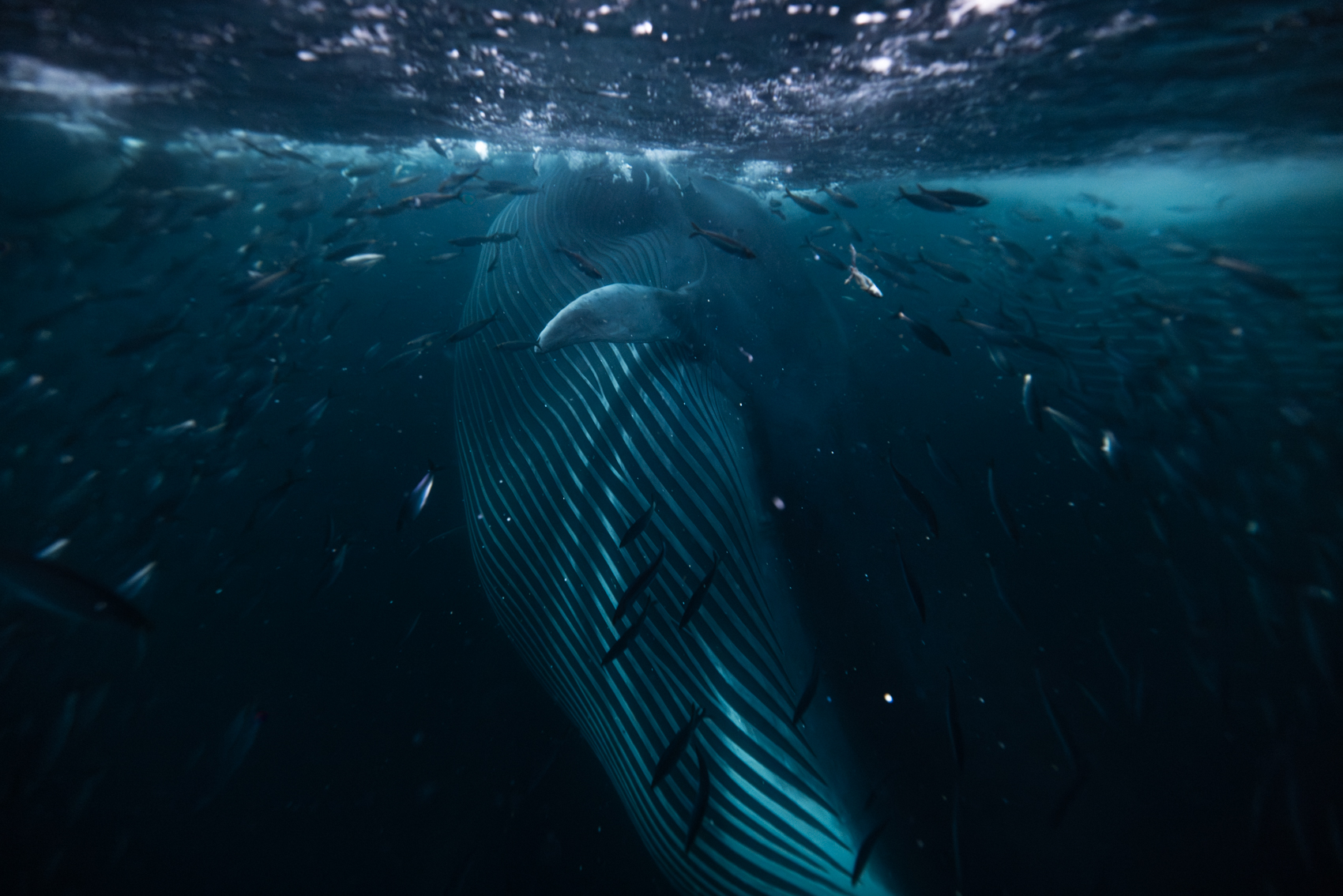
At over 70 feet in length, you might think it would be difficult to photobomb.
This fin whale proved that size is just a number.
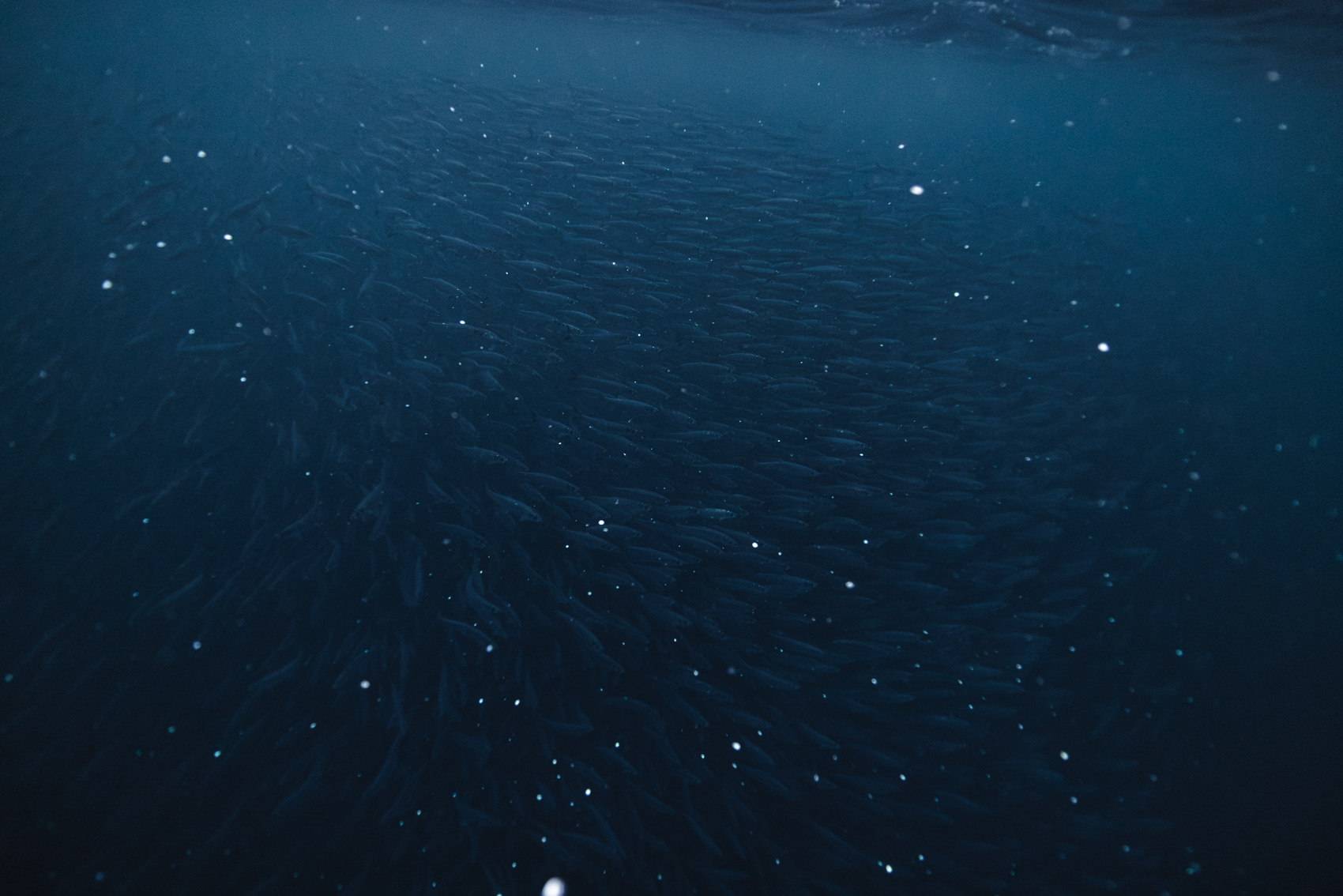
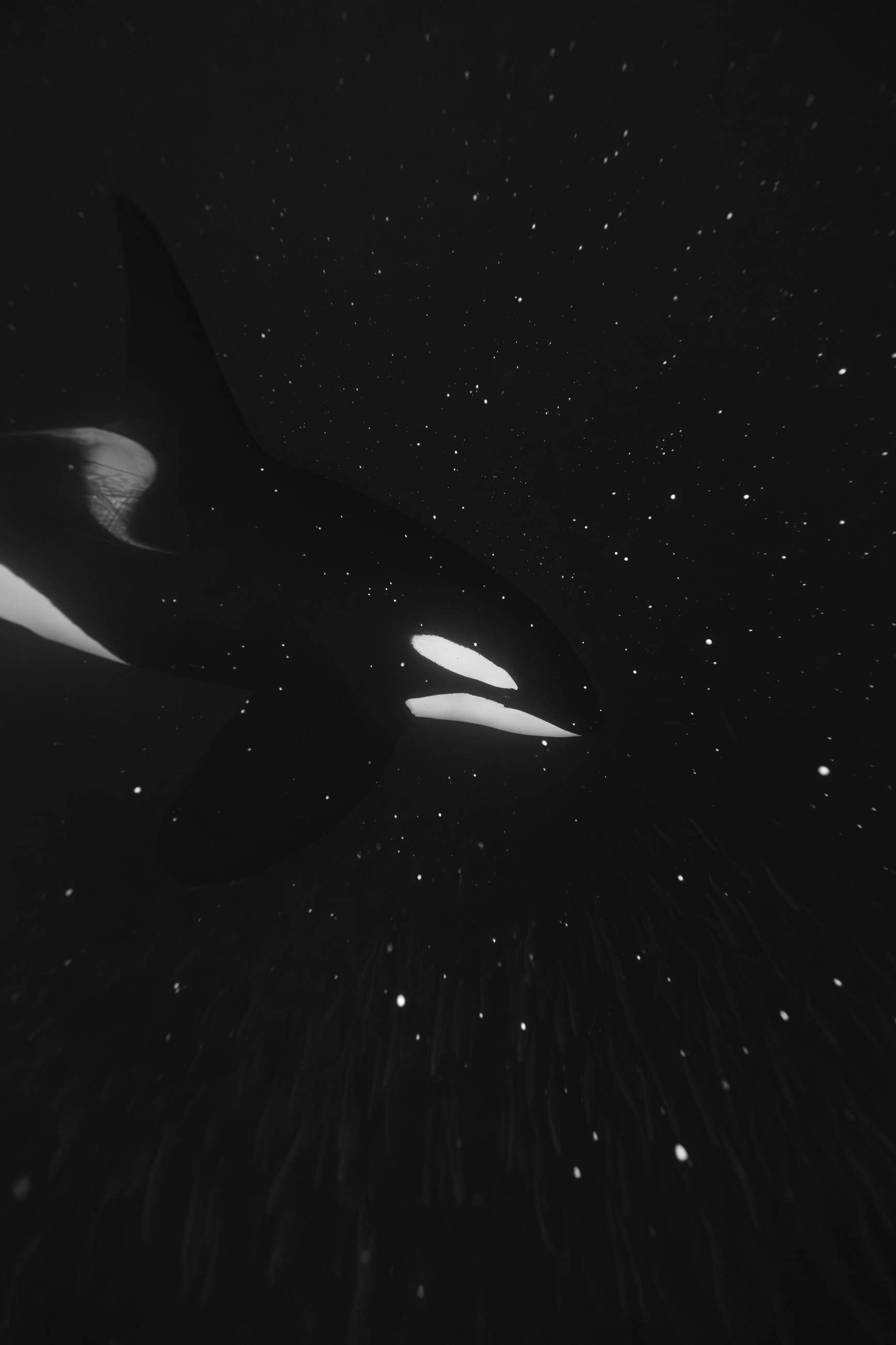
During an early morning briefing along Norway’s northern coast, my guide gave one specific instruction: don't swim over a bait ball. These swirling masses of herring form in defense against orcas, who drive them towards the surface.
The warming stems from the risk of a humpback or fin whale lunging from the depths to feed—advice that's far easier to absorb from the warmth of the boat than in the frigid Arctic waters, where pandemonium plays out.
Chaos arrived on my third morning in the water, when a pod of orcas began their hunt. They circled, pushing the herring into a tighter formation.
My head was on a swivel, trying to capture the orcas in action, when a giant emerged from the darkness below. Focused on the distant shape—and with my mask limiting my peripheral vision—I didn't see the second whale coming straight for me.
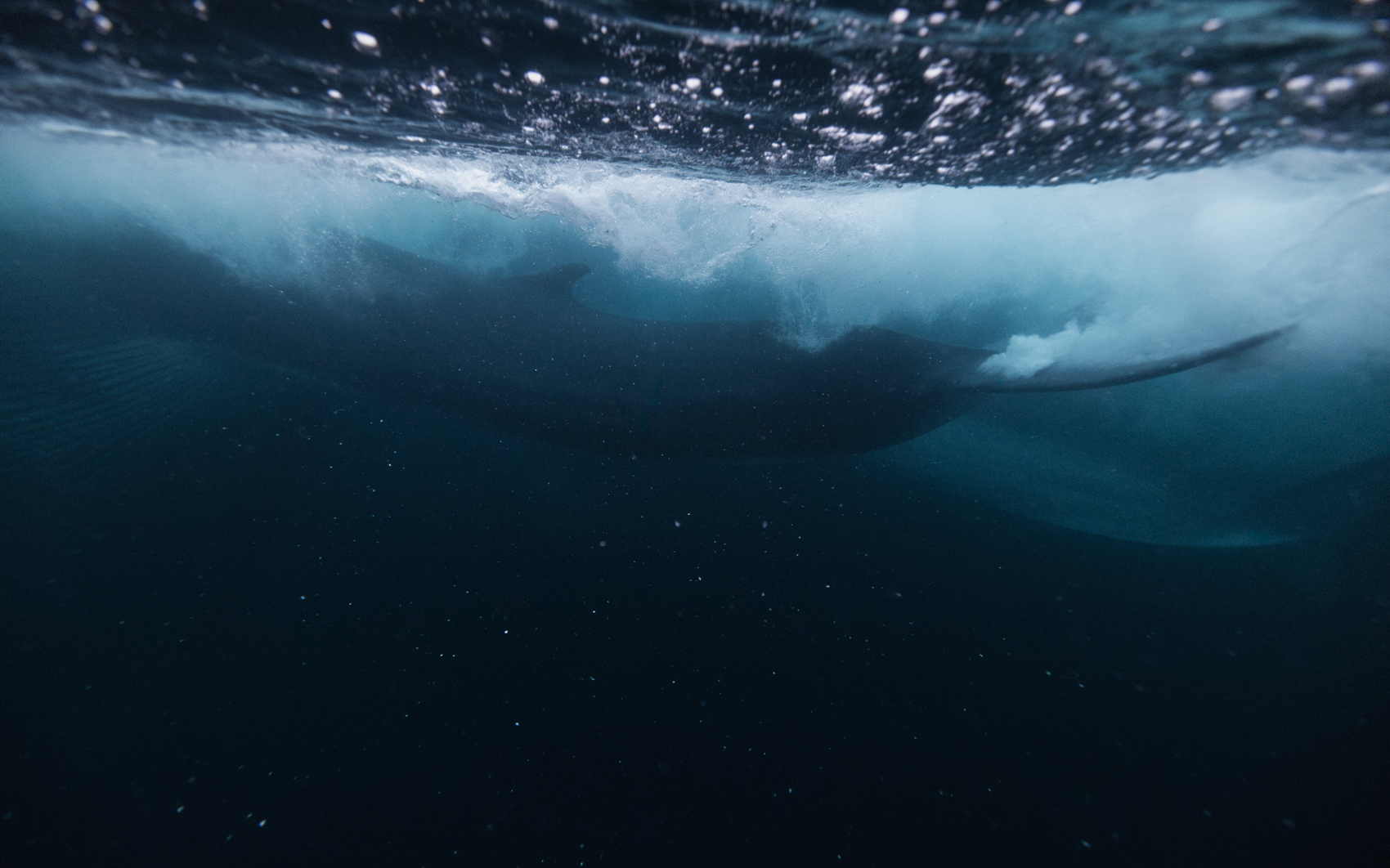
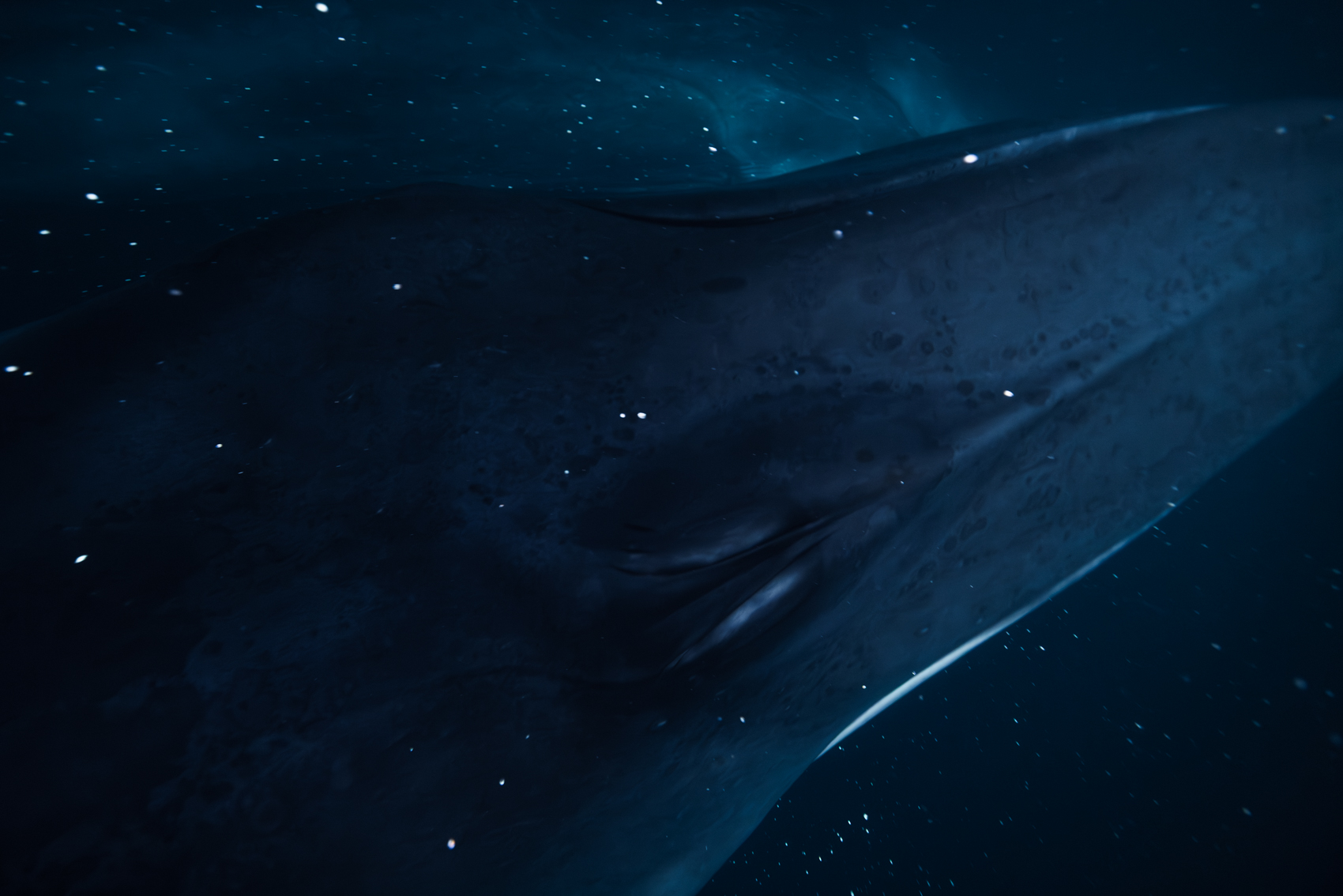
My camera caught it before I did. A flash of gray passed beneath me, and I looked down to find the top of a fin whale immediately below my fins.
I remember blurting a muffled four-letter word into my snorkel and jerking my legs up, as if that would offer any real protection. The truth is, if this whale had wanted to take me for a ride, I wouldn't have had much say in the matter.
Somehow, I managed to keep my camera fixed on the animal, holding the shutter as it surfaced to breathe. An image of the distant animal would have made for a fine memory, but it was the surprise visitor just below that made this one a keeper: the ominous bow of a living cruise ship, forging ahead, stopping for no one.
One of the questions I’m often asked is whether being in the water with these animals is intimidating. Everyone has their own threshold for what feels comfortable, but having a camera in front of me creates a buffer. Not a physical one—a small housing wouldn't offer much protection in a collision with a 50-ton whale—but a mental one. When you're focused on capturing an image, you often become numb to the absurdity unfolding around you.
There are moments, though, when the absurdity is abundantly clear.
This was one of them.

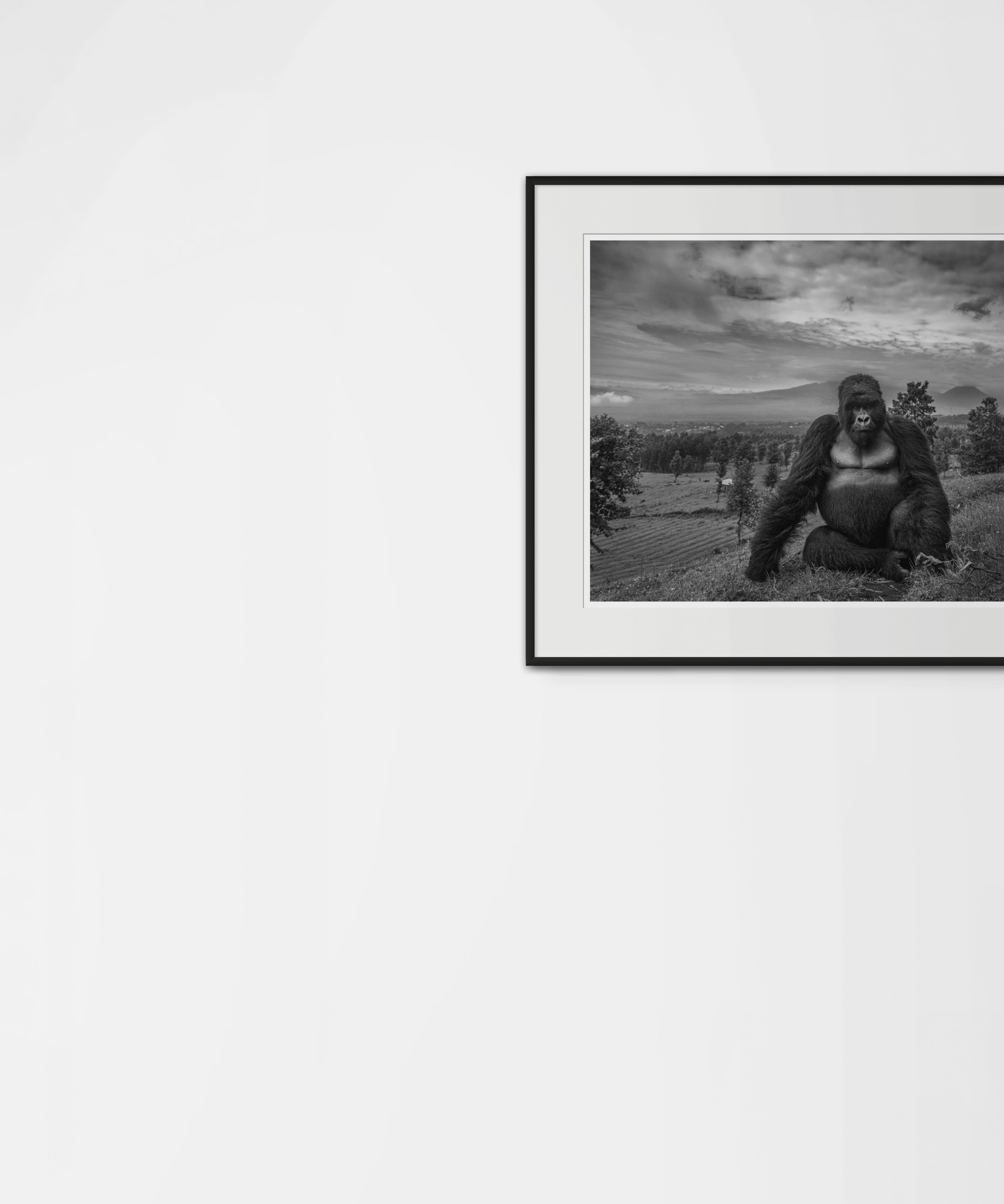
LIMITED EDITION
A moment captured for a life on paper.
Eric works with a renowned print studio in Brooklyn, New York, known for decades of expertise in archival pigment printing. The local lab allows for a collaborative approach, ensuring that his intended vision is expressed in the final artwork. When cared for properly, archival pigment prints can last for over a century.
Archival Pigment Prints
Modern printmaking, refined. Pigment prints utilize state-of-the-art digital technology and high-quality pigment-based inks to achieve striking reproductions. A digital image is applied directly onto the paper using precision inkjet printers, ensuring both image quality and longevity.
Vision meets the surface. Archival papers differ in weight, material, and texture. A paper is chosen to best suit the intent of the piece, from satin finishes to enhance rich shadows and colors, to handmade Japanese rice paper that offers a more textured and vintage feel.
The edition size ensures that only the number of prints indicated will ever be produced. Each print is proofed, reviewed, numbered, and signed by Eric, and includes a Certificate of Authenticity that is unique to your artwork.
Prices from $3,500 USD
8'' x 12'' / 20.3 x 30.5 cm
Edition of 3 + 2 AP
Larger pieces available by commission
Surprises should be subject to a weight limit. These orca feeding frenzies are the reason you find yourself in these frigid waters, but sometimes they arrive with a jump scare the size of a tractor trailer.

.webp)

Pigment-based inks and precision digital technology achieve striking reproductions. Each image is applied directly onto archival paper using high-fidelity inkjet printers, ensuring both image quality and longevity.

Archival papers differ in weight, material, and texture. Each is chosen to best suit the intent of the piece—from satin finishes that enhance shadows and color, to washi that offers a textured, tactile feel.
Silver gelatin prints are produced using traditional darkroom techniques that date back to the early 20th century. The image is exposed onto paper coated with a light-sensitive silver salt emulsion and developed through chemical processing.
The paper's gelatin layer captures intricate details and textures within an image. Prints reveal rich blacks and a broad tonal range, giving each piece a distinct dimensionality.
Each edition is strictly limited to the number of prints indicated. Every work is proofed, reviewed, signed, and accompanied by a numbered Certificate of Authenticity.
A select number of Artist Proofs are reserved for the artist, family, or collectors.
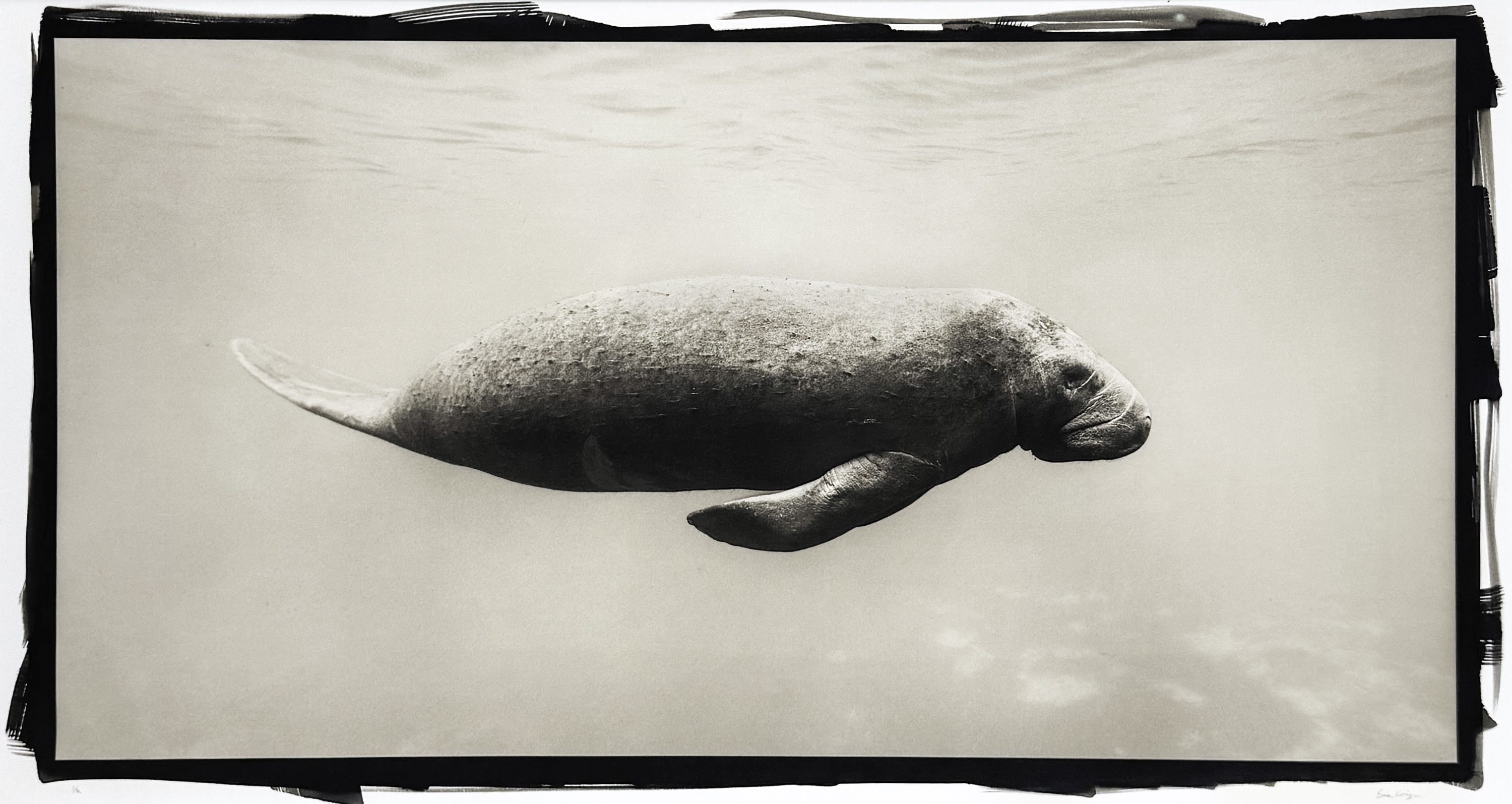
Platinum-palladium printing originated in the 19th century. It is a manual process requiring extensive preparation and craftsmanship, and some of the rarest metals on earth.
A digital photograph is converted to a negative of the image, which is then used in this traditional contact printing method.
Rich blacks, soft grays, and detail in shadows are unmatched, even by modern inkjet printers. Smooth tonal transitions and a warm appearance create a print that is uniquely platinum.
Black brush strokes around the edge of the image from the chemical application reveal the handmade nature of the piece—no two will ever be the same.
Platinum-palladium prints have an archival rating of more than 1,500 years.
A solution of noble metals is used to coat the paper, allowing for the print's longevity. When ultraviolet light is exposed through this digital negative onto the chemical layer, platinum particles become physically embedded in the fibers of the paper. These particles form the image, which is then developed in a chemical bath.
Each edition is strictly limited to the number of prints indicated. Every work is proofed, reviewed, signed, and accompanied by a numbered Certificate of Authenticity.
A select number of Artist Proofs are reserved for the artist, family, or collectors.
For additional information on this print, including availability, pricing, or edition details, please complete the form below.





.jpg)


.jpg)
.jpg)

%20srgb.jpg)